Category: Politics

  • Trump Seeks Supreme Court Approval for National Guard Troop Deployment in Chicago

    Trump Seeks Supreme Court Approval for National Guard Troop Deployment in Chicago

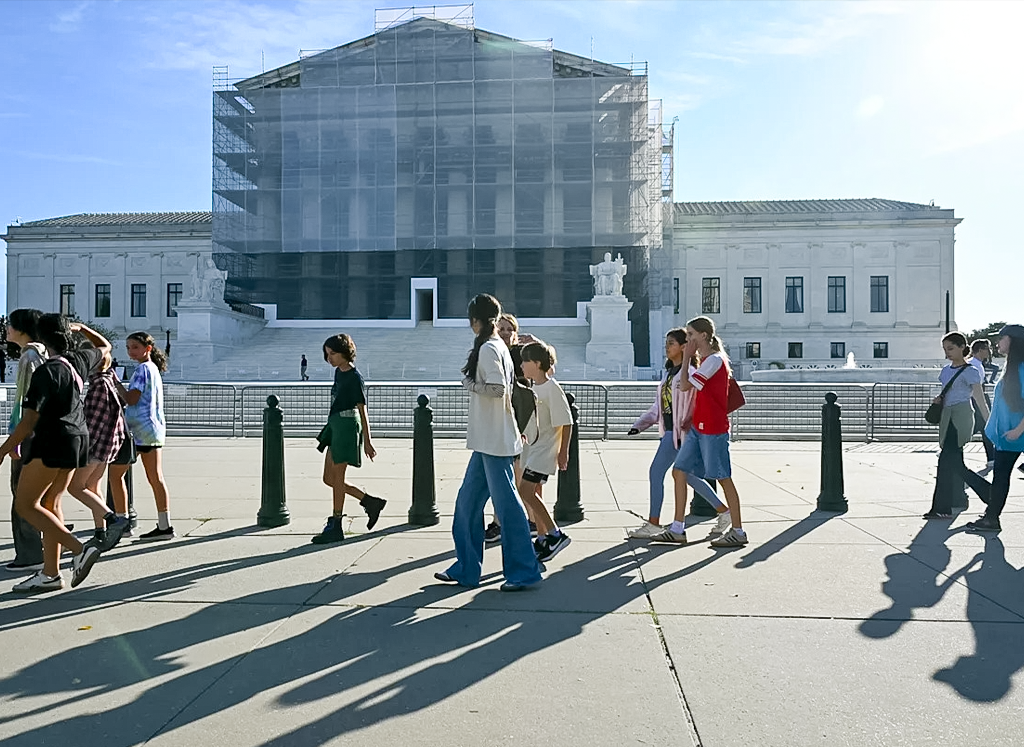
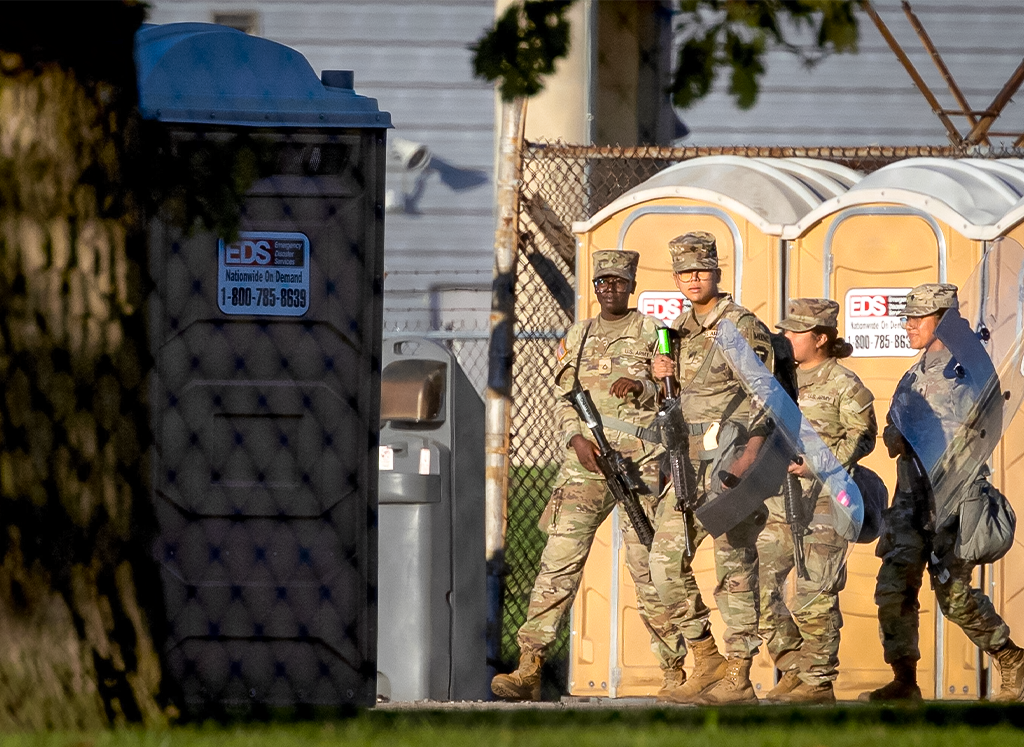
    President Donald Trump brought the contentious legal battle over his authority to use such troops on American territory before the justices for the first time on Friday when he pleaded with them to permit him to deploy the National Guard in Chicago. At a time when the government is trying to send the National Guard to several US cities, the filing sets up a confrontation over presidential authority.

    Following a slew of rulings from lower federal courts, the emergency appeal temporarily halts the administration’s operations on the basis that Trump exaggerated the necessity of mobilizing the National Guard. The 7th US Circuit Court of Appeals, located in Chicago, upheld a temporary injunction against that endeavor on Thursday.

    In a lawsuit concerning his attempt to send the guard to Chicago, Trump appealed to the Supreme Court. The lower court ruling “improperly impinges on the president’s authority and needlessly endangers federal personnel and property, “according to the administration’s appeal.

    The case brings the dispute before the Supreme Court, which has rarely made decisions regarding such deployments but has frequently deferred to the president on security-related issues and the definition of a national emergency.

    In order to execute the deployment while the high court reviews the matter, the administration requested a prompt order. The Trump administration contends in the appeal that lower courts were unlawfully interfering with the president’s power to manage federalized guard members.

    Overseeing the President’s Use of Commander-in-Chief Authority

    “The judicial branch is in the untenable position of controlling the military chain of command and judicially micromanaging the exercise of the president’s commander-in-chief powers, including the decision about which military forces the president can deploy,” the administration claimed, referring to the lower court order that temporarily blocked the deployment.

    The appeal claims that federal officials in Chicago “have been threatened and assaulted, attacked in a harrowing pre-planned ambush involving many assailants,” using powerful language to characterize the situation. Solicitor General D. John Sauer told the court, “Federal agents are compelled to frantically rush to protect themselves and federal property, diverting resources from their law-enforcement mission to conduct protective operations instead.”

    President Trump Seeks Supreme Court Approval for National Guard Troop Deployment in Chicago
    US President Seeks SCOTUS Approval for National Guard Troop Deployment in Chicago
    Source: Web

    This framing begins in sharp contrast to the decision earlier this month from US District Court Judge April Perry, which detailed the circumstances on the ground. Biden nominee Perry cited what she called “a troubling trend of defendants’ declarants equating protests with riots and a lack of appreciation for the wide spectrum that exists between citizens who are obstructing, assaulting, or doing violence, and those who are observing, questioning, and criticizing their government.”

    The Department of Justice has mostly relied on the 1827 Martin v. Mott Supreme Court ruling to support the deployments. During the War of 1812, Jacob Mott, a member of the New York militia, defied President James Madison’s command to mobilize. Mott claimed that Madison had miscalculated the threat, but the SCOTUS rejected this claim, ruling that “the authority to decide whether the exigency has arisen belongs exclusively to the president.”

    A Range of Honest Judgment

    Sauer stated in the administration’s appeal on Friday that Trump’s present deployments are “squarely controlled” by that decision. The Trump administration has contended that federal courts are not even allowed to examine a president’s decisions to raise the alarm because of this.

    However, the US states contesting those rulings have mocked the idea that the demonstrations against ICE personnel are like an invasion by foreign troops.  Additionally, they cited Sterling v. Constantin, a 1932 ruling in which judges examined a former Texas governor’s choice to use the National Guard to close some of the state’s oil fields in an effort to reduce output.

    The Supreme Court decided in that instance that courts could examine deployment choices that were outside of a “range of honest judgment.” It was unclear at first how quickly the Supreme Court would decide the issue, but it asked state and municipal officials to respond by Monday night, which is quicker than normal. Since regaining power in January, Trump has filed emergency cases in which the conservative court, which has a 6-3 record, has sided with him.

  • Trump Met with Top Congressional Leaders at White House as Shutdown Nears

    Trump Met with Top Congressional Leaders at White House as Shutdown Nears

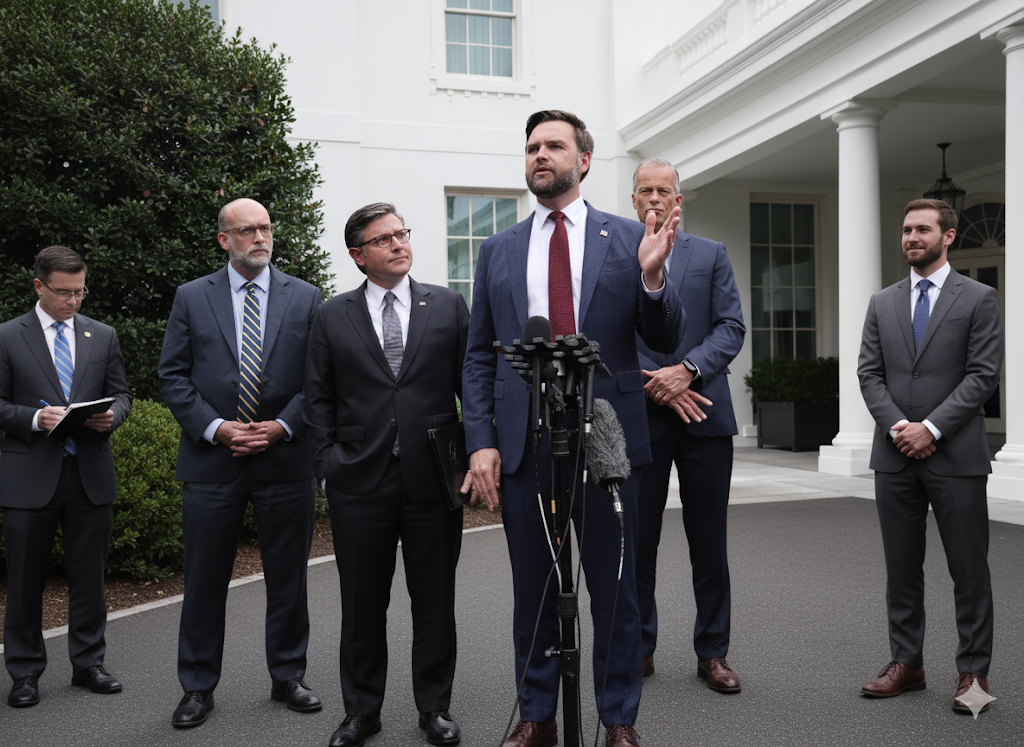
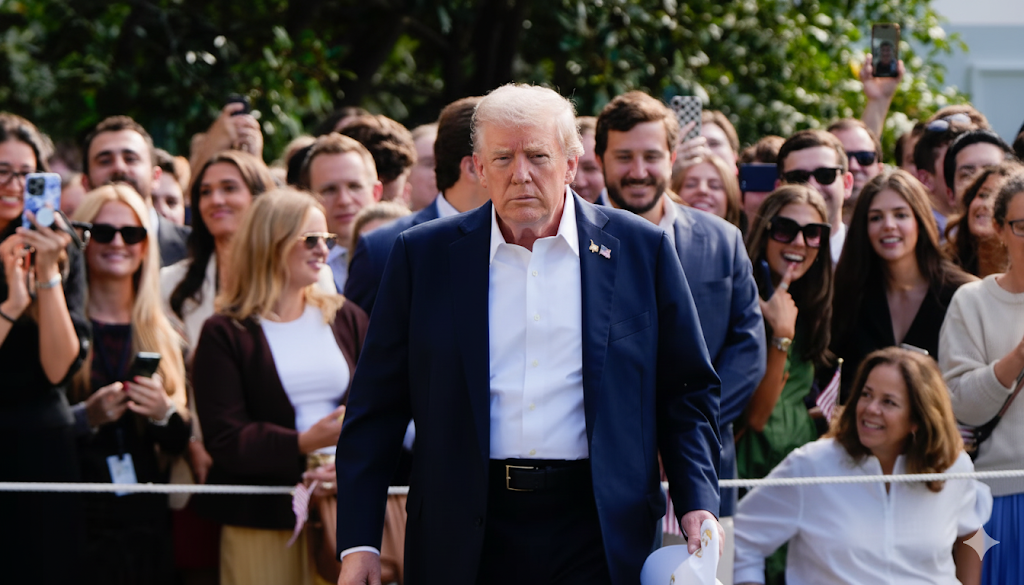
    According to several official sources, U.S. President Donald Trump met with the top four congressional leaders at the White House on Monday to discuss the impending government shutdown, but the meeting ends with no deal. His final meeting with Senate Majority Leader John Thune, Senate Minority Leader Chuck Schumer, House Speaker Mike Johnson, and House Minority Leader Hakeem Jeffries comes as government funding is set to expire tomorrow night, with both sides remaining entrenched in their positions.

    Earlier this week, the president canceled a meeting with the Democratic leaders Jeffries and Schumer. He called the Democratic demands ridiculous and unserious, and said that they scrapped the meeting, which made it unproductive.

    Previously, CNN reported that the decision came after President Trump spoke with Thune and Johnson on a call, during which both Republicans argued against making an agreement with the Democrats. However, the Monday meeting will house all top leaders.

    In a Saturday statement, Schumer and Jeffries reiterated that Democratic leaders are willing to meet at any time, anywhere, and with anyone to negotiate a bipartisan spending deal that meets the needs of the American people.

    On Friday, Schumer called Thune to push for a meeting, an advisor for the minority leader said. It will be the first time Trump and Schumer have spoken since the beginning of the president’s second term, and the first time Jeffries has met with him in person.

    Enhanced Affordable Care Act Premium Subsidies

    Although the GOPs control the White House and the Capitol Hill, they require at least seven Democrats in the Senate to join them to approve a spending package under the chamber’s rules.

    Trump Met with Top Congressional Leaders at White House as Shutdown Nears

    Schumer is insisting that any funding bill include an extension of the enhanced Affordable Care Act premium subsidies, along with other provisions, to secure his party’s support. Republican leaders are seeking a seven-week extension of funding, along with additional funds for security for the executive, legislative, and judicial branches.

    If the deadlock is not resolved, the looming government shutdown could be unlike any other recent memory. Although no two government shutdowns are identical, the White House Office of Management and Budget, along with the Trump administration, has indicated a willingness to adopt a different approach. They are encouraging companies to reduce their workforce in programs that lack funding and do not align with the Trump administration’s priorities.

    The government shutdowns are no strangers to Trump, and the most recent one occurred during his initial term, starting in late December 2018 and lasting more than a month, around 35 days, the longest on record.