Blog

  • US State Department Delegation Visits Venezuela for First Time since Maduro’s Capture

    US State Department Delegation Visits Venezuela for First Time since Maduro’s Capture

    A team from the US State Department visited Venezuela on Friday for the first time since Nicolas Maduro was ousted. This visit is part of the US effort to reopen its embassy in Caracas and signals the administration’s goal to re-establish a diplomatic presence in Venezuela.

    US diplomatic and security staff from the Venezuela Affairs Unit, based in Colombia, traveled to the Venezuelan capital. They were with acting US Ambassador to Colombia John McNamara to assess the situation for a gradual return to operations.

    In 2019, the US withdrew its diplomats and closed the embassy in Caracas. Since then, the Venezuela Affairs Unit has been working with US diplomats in Bogotá.

    A senior State Department official said on Monday that they are preparing to reopen the embassy in Venezuela if the president decides to proceed.

    Discussions are ongoing about meetings between US diplomats and Venezuelan political leaders, but these meetings are not likely to happen during this trip, according to a senior US official.

    The Venezuelan foreign ministry announced on Friday that it is starting an “exploratory diplomatic process” with the US. This process aims to re-establish diplomatic missions in both countries and discuss the implications of what they call the “aggression and kidnapping” of Maduro and his wife.

    They confirmed that the US delegation came to Venezuela to assess technical and logistical needs, and stated that a group of Venezuelan diplomats would travel to the US to complete necessary tasks.

    Will US Oil Companies Reopen Operations in Venezuela?

    Former diplomats say that the lack of a US presence in Venezuela will make it difficult to rebuild the country and ensure accountability. Trump wants US oil companies to return to Venezuela to help with rebuilding efforts. He mentioned earlier this week that the US was “asked” to reopen its embassy but did not give more details.

    Secretary of State Marco Rubio told important lawmakers during a briefing on Monday that the State Department is looking into reopening the US embassy. He said officials need to check the building to see if it is in good enough shape to reopen, according to a source familiar with the briefing. He added that they plan to send people in the coming days.

    Another source mentioned that there are discussions about sending a team of experts to inspect the building’s condition. They need to find out what repairs are necessary before reopening the embassy.

    The embassy has been closed since the Maduro government cut diplomatic ties with the first Trump administration after it recognized opposition leader Juan Guaidó. At the same time, Maduro closed Venezuelan diplomatic offices and withdrew personnel from the US.

    One source said that it might take a long time for the embassy to fully reopen. However, a small team could be set up quickly. Some diplomats have already offered to work in Caracas.

    A former senior US official mentioned that reopening the embassy “could be very fast.” However, the State Department needs to be sure that the security conditions are safe for US personnel.

    “The key issue is whether we have the right security conditions and confidence that our people won’t be injured or kidnapped by the regime. That is the difficult part,” the official told CNN.

  • US Authorities Seized 5th Oil Tanker Linked to Venezuela – Officials

    US Authorities Seized 5th Oil Tanker Linked to Venezuela – Officials

    US forces have seized another tanker in the Caribbean Sea as part of ongoing efforts to control Venezuelan oil exports. The tanker, called the Olina, is on several countries’ sanctions lists and is the fifth vessel taken by the US in recent weeks.

    The US uses these seizures to pressure Venezuela’s interim government and to remove the “dark fleet” of over 1,000 tankers that carry sanctioned and illegal oil. The US military’s Southern Command stated, “Once again, our forces have sent a clear message: ‘there is no safe haven for criminals.’”

    Officials said the operation took place before dawn, with Marines and sailors working alongside the Department of Homeland Security. They seized the tanker after it left Venezuela, trying to avoid US forces.

    The Olina reportedly left Venezuelan waters late Sunday after US forces captured President Nicolás Maduro in an early morning raid.

    Homeland Security Secretary Kristi Noem posted on X that this was another “ghost fleet” tanker suspected of carrying embargoed oil. She shared a video showing troops descending onto the ship from a helicopter, calling the operation “safe” and “effective.”

    Maritime risk company Vanguard Tech reported that the vessel was trying to break through the US naval blockade in the Caribbean. It had been sailing under a false flag registered to Timor-Leste, according to the International Maritime Organization.

    Vanguard Tech added that the vessel’s location tracker was last active 52 days ago, northeast of Curacao. They noted that the seizure followed a long pursuit of tankers linked to sanctioned Venezuelan oil shipments in the area.

    The US had sanctioned the Olina last January when it was named Minerva M, accusing it of helping finance Russia’s war in Ukraine by moving Russian oil to foreign markets.

    US Back-to-back Operations

    This week, the United States announced it seized two tankers involved in Venezuelan oil exports during operations in the North Atlantic and the Caribbean. One of the tankers is the Marinera, which is flagged from Russia. The UK Royal Navy helped capture it by providing support from air and sea.

    The Marinera is believed to be part of a shadow fleet that transports oil for Venezuela, Russia, and Iran, violating US sanctions. US officials say the Marinera was falsely flying the flag of Guyana last month, making it stateless.

    The second tanker, the M/T Sophia, is accused of engaging in illegal activities. Experts explain that, under international maritime law, authorities can board stateless vessels.

    US President Donald Trump stated that Venezuela, which has the world’s largest proven oil reserves, will hand over up to 50 million barrels of oil worth about $2.8 billion (£2.1 billion) to the US.

    Secretary of State Marco Rubio said the US will sell this oil at market rates and manage how the proceeds are used to benefit the Venezuelan people.

  • Iran’s Supreme Leader Warns Against Foreign Enemies

    Iran’s Supreme Leader Warns Against Foreign Enemies

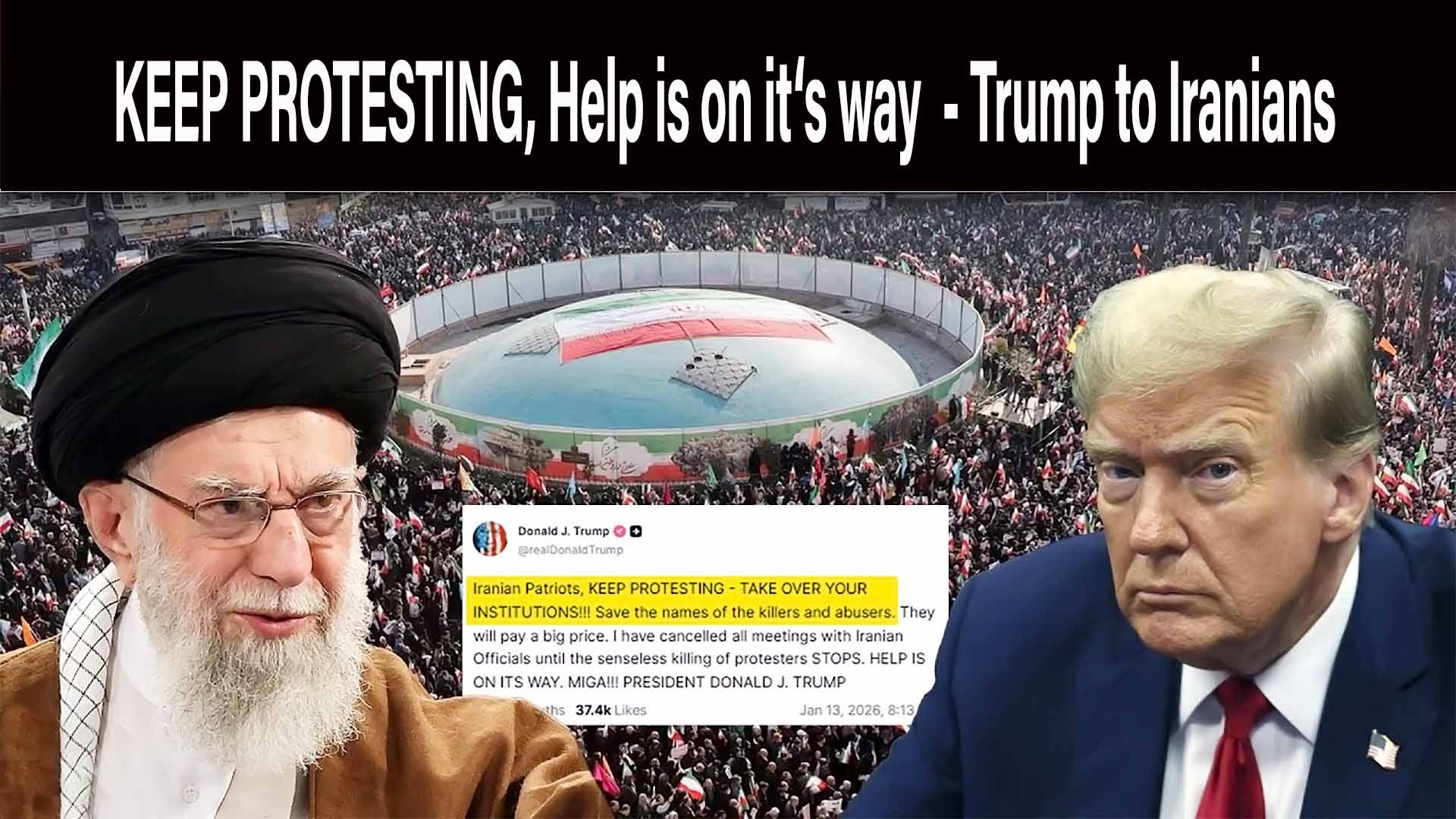
    Iran’s Supreme Leader, Ayatollah Ali Khamenei, has called for unity as mass protests continue across the country. He described the protests as actions by terrorists.

    In a speech on Iranian state television on Friday, Khamenei warned against these protests. He claimed they are part of a foreign plot led by the United States. He also threatened that the authorities would take strong action to end the unrest.

    Khamenei accused the protesters of working for US President Donald Trump. He said they were vandalizing public property and warned that Tehran would not accept people acting as “mercenaries for foreigners.” He claimed that Trump has “stained hands” from the blood of Iranians.

    The government is struggling to control the situation, which has resulted in the deaths of many protesters and at least four members of the security forces since the protests began on December 28.

    President Masoud Pezeshkian has called for calm and urged the state to listen to “genuine” concerns. However, other officials have warned that the authorities are unlikely to show leniency because they see the protests as supported by foreign enemies.

    Cut Off

    Protests over economic issues started in Iran when shopkeepers in Tehran became upset about a steep drop in the value of the rial currency.

    To control the protests, the government cut off internet access on Thursday. This blackout continued on Friday, and phone services were also down, causing airlines to cancel flights in and out of the country.

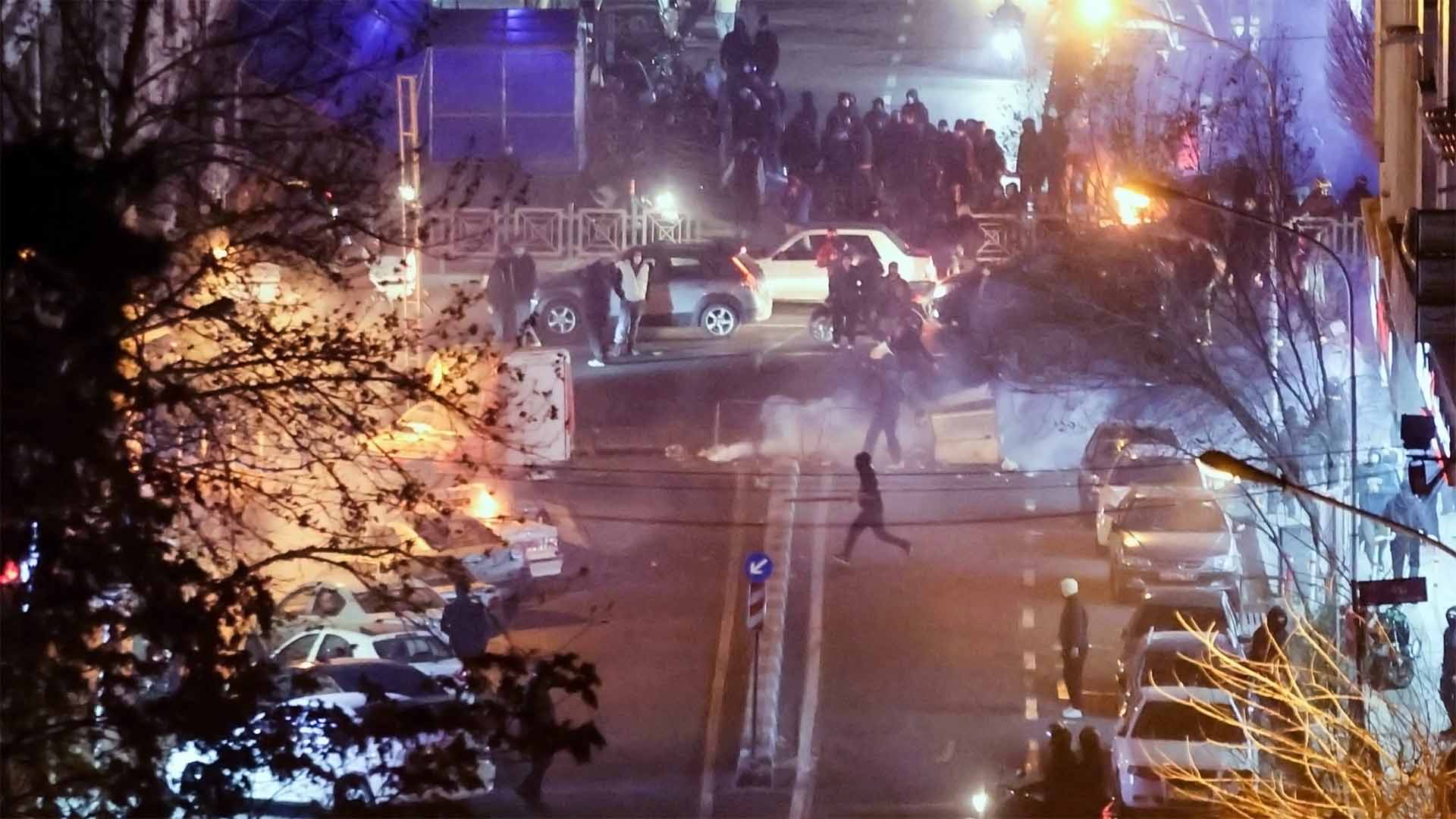
    Despite these measures, activists shared videos showing protesters chanting against the government around bonfires, with debris scattered on the streets in Tehran and other areas.

    On Friday, Iranian state media responded to the protests. They claimed that “terrorist agents” from the US and Israel had caused violence and set fires. They also reported “casualties” but did not provide details.

    Trump said on Thursday that the US would not let Tehran harm protesters. He stated, “Iran has been told very strongly that if they do that, they’re going to have to pay hell.”

    Trump has also refused to meet with Iran’s self-proclaimed “Crown Prince” Reza Pahlavi, indicating that the US is not ready to support a successor to the current government if it collapses.

    Pahlavi, the son of Iran’s last shah, who was overthrown in the Islamic Revolution of 1979, has called for more protests. Holly Dagres, a senior fellow at the Washington Institute for Near East Policy, said Pahlavi’s call has “turned the tide” of the protests. She noted that social media posts show Iranians are taking his call seriously to try to oust the Islamic Republic.

    Dagres explained, “This is exactly why the internet was shut down: to prevent the world from seeing the protests. Unfortunately, it also likely provided cover for security forces to kill protesters.”

    In a TV address, Supreme Leader Khamenei said protesters are “ruining their own streets to make the president of another country happy,” referring to Trump. An audience was heard chanting, “Death to America!”

  • Democratic Representative Steny Hoyer is retiring from Congress

    Democratic Representative Steny Hoyer is retiring from Congress

    Maryland Democratic Representative Steny Hoyer will announce his retirement on Thursday after serving in Congress for over 40 years.

    At 86 years old, Hoyer told The Washington Post that he decided to leave the House after talking with his family during the holidays.

    Hoyer is the third-longest-serving member of the House. He said, “I did not want to be one of those members who clearly stayed too long and lost the ability to do the job.”

    The former House majority leader will make his official retirement announcement in a speech on the House floor on Thursday.

    Unlike many other members who have left Congress feeling frustrated with the political situation, Hoyer said he still loves the institution.

    He noted that his constituents often ask when Congress will work better. He explained, “As long as Americans elect angry, confrontational people, don’t be surprised when Congress is angry and confrontational too.”

    Hoyer expressed concern about the decline of American politics over the years. He blamed much of it on former President Donald Trump, especially regarding Trump’s pardons for people involved in the January 6, 2021, attack on the U.S. Capitol.

    He said, “His greatest strength is that he has no shame, and his supporters seem indifferent to his actions, including pardoning 1,600 people who committed treason. It’s astounding that he gets away with it.”

    About Hoyer Career

    Steny Hoyer spent over a decade in the Maryland state Senate before moving to the U.S. House of Representatives. He was elected to Congress in 1981 through a special election. During his time in Congress, he held key roles such as House Democratic Whip, Deputy Majority Whip, and Chair of the Democratic Caucus.

    Hoyer had a talent for passing important laws through divided groups, including the Americans with Disabilities Act in 1990.

    In 2023, Hoyer stepped back from leadership roles, along with Nancy Pelosi and Jim Clyburn, who also left their positions as House Speaker and Majority Whip. This change marked a generational shift for the Democratic Party in the House.

    Hoyer told CNN’s Dana Bash, “I think all of us have been around for some time and have a good sense of the timing of decisions. We all felt this was the right time.”

    In an interview with the Washington Post, Hoyer praised Pelosi, who announced she would not run for reelection after nearly 40 years in Washington. He described her as “tough as nails” and said she was the best of the ten speakers he worked with during his time in Congress.

    “Sure, I would have loved to have been Speaker. Who wouldn’t want to be Speaker? But I don’t have deep regrets,” he told the paper.

  • US Senate to Vote on Limiting Trump on Venezuela

    US Senate to Vote on Limiting Trump on Venezuela

    The U.S. Senate will vote on a resolution Thursday that would stop President Donald Trump from taking military action against Venezuela without approval from Congress. Supporters believe the vote could be close.

    This vote comes days after U.S. forces captured Venezuelan President Nicolás Maduro during a military operation in Caracas. Senators will discuss this resolution, which is part of several efforts to limit military actions against Venezuela, especially after recent attacks on boats off its coast in September.

    Republicans have blocked similar measures before, but the last vote was close at 49-51. Two Republican senators joined Democrats to support a resolution in November. At that time, officials from the administration had told lawmakers they did not plan to change the government or conduct strikes in Venezuela.

    After Maduro’s capture, some lawmakers accused the administration of misleading Congress. Democrats have spoken out publicly, while some Republicans have expressed concerns privately.

    Senator Rand Paul, a Kentucky Republican who helps sponsor the resolution, said, “I spoke to at least two Republicans today who did not support this resolution before but are now reconsidering.” He added, “I can’t guarantee how they will vote, but at least two are thinking about it, and some are openly sharing their concerns.” Paul did not name the Republicans. Trump’s party has a 53-47 seat majority in the Senate.

    Obstacles Ahead

    The Senate’s approval of the war powers resolution is a big win for lawmakers who want more control over military actions. However, for the resolution to become law, it needs to pass the Republican-led House of Representatives and get through a likely veto from Trump, which requires two-thirds majority votes in both chambers.

    Lawmakers understand the challenges ahead but believe some Republicans may worry about a long and costly effort to change the government in Venezuela. On Wednesday, Trump said on his Truth Social platform that he wants to raise the U.S. military budget from $1 trillion to $1.5 trillion.

    Senator Kaine noted that U.S. forces have been hitting Venezuelan boats for months. He also mentioned Trump’s claim that the U.S. would “run” Venezuela and the seizure of Venezuelan oil, stating, “This is not a surgical arrest operation at all.”

    The U.S. Constitution says that any president must get Congress’s approval before starting a long military operation. Senators against the war powers resolution argue that taking on Maduro is a law enforcement issue, not a military one. Maduro is on trial in a U.S. court for drug and gun charges, which he denies. They argue that Trump, as the commander-in-chief, has the right to carry out limited military actions he thinks are necessary for national security.

  • US to Takeover Greenland Using Military – White House

    US to Takeover Greenland Using Military – White House

    U.S. President Donald Trump is considering different ways to acquire Greenland, including possible military action. The White House has stated that gaining control of Greenland, which is a semi-autonomous part of Denmark, is important for national security.

    This statement came after European leaders expressed their support for Denmark, which has been rejecting Trump’s plans for the Arctic Island.

    Trump said over the weekend that the U.S. “needed” Greenland for security. Danish Prime Minister Mette Frederiksen warned that any U.S. attack would threaten the future of NATO.

    On Tuesday, the White House said, “The president and his team are looking at various options to achieve this important foreign policy goal, and using the U.S. military is always an option for the commander-in-chief.”

    NATO is a military alliance where member countries support each other in case of attacks.

    Trump Has No Plans to Take Over Greenland – Rubio

    US Secretary of State Marco Rubio told lawmakers on Monday that the Trump administration did not plan to invade Greenland. Instead, he talked about the idea of buying the island from Denmark, according to the Wall Street Journal and other U.S. media.

    On Tuesday, a State Department spokesperson said that the U.S. wants to create lasting business relationships that benefit Americans and the people of Greenland.

    The spokesperson added that the United States, Denmark, and NATO allies share concerns about increasing activity from common adversaries in the Arctic.

    Greenland and Denmark have asked to meet with Rubio soon to discuss U.S. claims about the island. Denmark’s Foreign Minister, Lars Løkke Rasmussen, said talking with America’s top diplomat should help clear up “certain misunderstandings.”

    On the same day, six European allies showed support for Denmark. They stated that “Greenland belongs to its people, and only Denmark and Greenland can decide on matters concerning their relations.”

    The European leaders emphasized that they also care about security in the Arctic. They believe this security must be achieved together with NATO allies, including the U.S. They also urged everyone to follow the principles of the UN Charter, including respecting sovereignty, territorial integrity, and the inviolability of borders.

    Respectful Dialogue

    Greenland’s Prime Minister, Jens-Frederik Nielsen, praised a recent statement and called for “respectful dialogue.”

    He said, “The dialogue must respect Greenland’s status, which is based on international law and the principle of territorial integrity.”

    Concerns about Greenland’s future arose after the U.S. military intervened in Venezuela. U.S. troops captured President Nicolás Maduro and took him to face drug and weapons charges in New York.

    A day later, Katie Miller, the wife of one of Trump’s senior aides, shared a map of Greenland in the colors of the U.S. flag on social media with the word “SOON.”

    On Monday, her husband, Stephen Miller, stated that it was the “formal position of the U.S. government that Greenland should be part of the U.S.”

    When asked during a CNN interview if the U.S. would rule out using force to take Greenland, Miller replied, “Nobody’s going to fight the U.S. over the future of Greenland.”

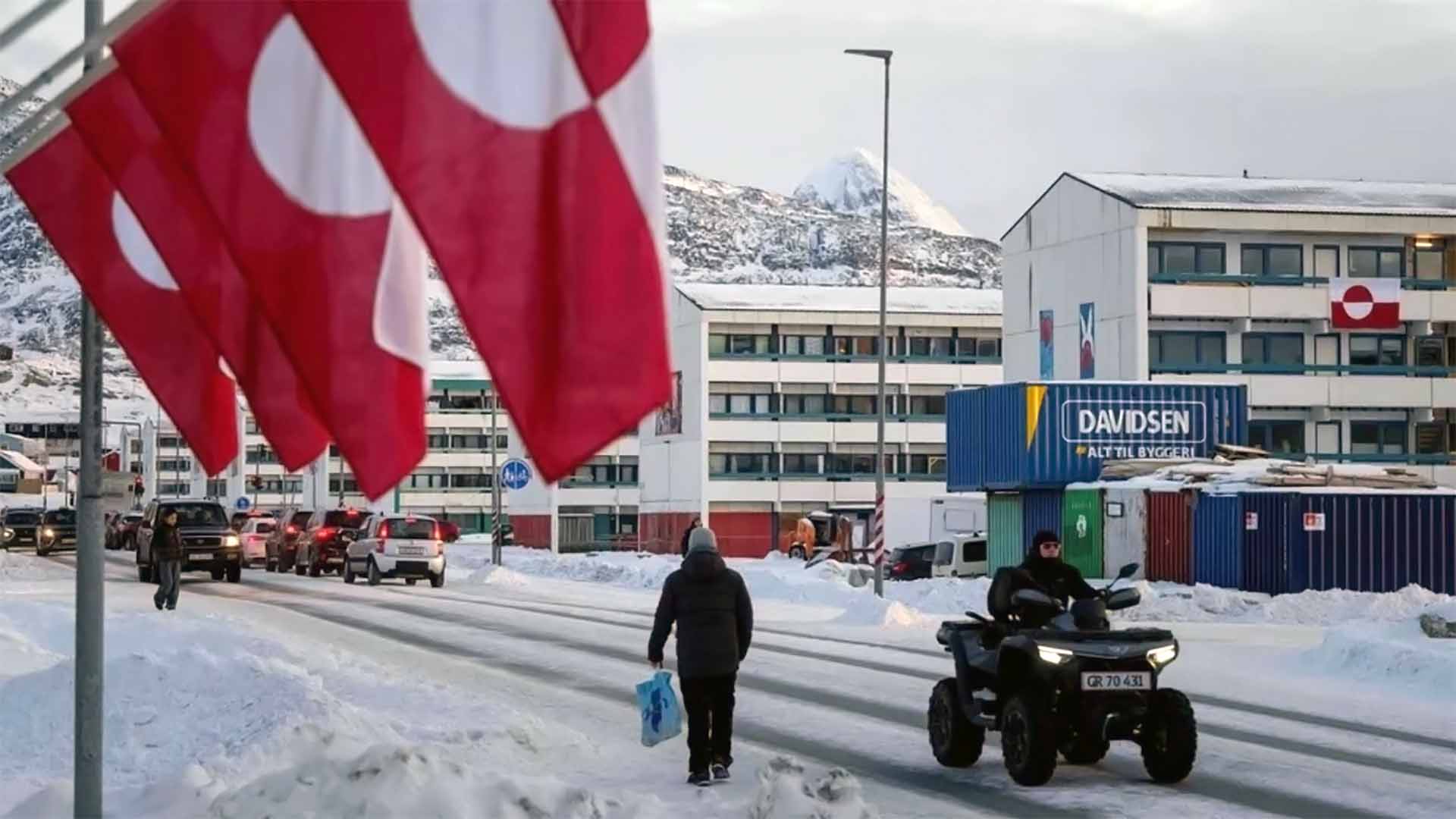
    Greenland has about 57,000 residents and has enjoyed self-government since 1979, although Denmark still controls its defense and foreign policy.

    Most Greenlanders want independence from Denmark, but many do not support becoming part of the U.S., where a military base already exists.

    Morgan Angaju, a 27-year-old Inuit from Ilulissat in western Greenland, expressed his fears, saying, “It was terrifying to hear the leader of the free world laughing at Denmark and Greenland and talking about us as if we are something to be claimed.”

    He highlighted, “We are already claimed by the Greenlandic people,” explaining that “Kalaallit Nunaat” means “the land of the Greenlandic people.”

    Angaju is also worried about what might happen next. He wonders if Greenland’s Prime Minister could face a similar fate to Maduro or if the U.S. might “invade our country.”

  • US Attempts to Seize Russian-flagged Tanker Connected to Venezuela

    US Attempts to Seize Russian-flagged Tanker Connected to Venezuela

    The U.S. tried to seize a Russian-flagged tanker linked to Venezuela on Wednesday. This action is part of President Donald Trump’s plan to control oil flows in the area and push Venezuela’s socialist government to ally with the U.S. After removing Venezuelan leader Nicolas Maduro, the U.S. is blocking sanctioned ships from entering and leaving Venezuelan waters. Two officials reported that the U.S. Coast Guard and military attempted to board a tanker that refused inspection last month and is flying a Russian flag.

    The operation could lead to more conflict with Moscow, as a Russian submarine and other vessels have been nearby following a two-week chase in the Atlantic. Russia has condemned U.S. actions regarding Venezuela and is already in conflict with the West over the Ukraine war.

    The Russian state broadcaster RT showed an image of a helicopter hovering near the tanker, named Marinera, suggesting that U.S. forces were trying to board it. The tanker is currently empty. The U.S. Coast Guard also intercepted another fully loaded tanker linked to Venezuela near the northeast coast of South America. This is the fourth incident of this kind in recent weeks.

    China Condemns US ‘Bullying’

    The Trump administration is trying to make a deal with Venezuela to send oil supplies from China and import up to $2 billion worth of crude oil. Trump has openly talked about controlling Venezuela’s large oil reserves with U.S. oil companies after removing President Nicolás Maduro, whom he calls a drug-trafficking dictator connected to the U.S.’s enemies.

    Maduro’s allies in the Socialist Party still hold power in Venezuela. Interim President Delcy Rodriguez is trying to balance denouncing Maduro’s “kidnapping” while also starting cooperation with the U.S. under threats from Trump. Trump said the U.S. would refine and sell up to 50 million barrels of oil stuck in Venezuela due to a U.S. blockade. This would be the first step in his plan to revive the oil sector, despite Venezuela having the largest oil reserves in the world.

    “This oil will be sold at its market price, and that money will be controlled by me, as President of the United States, to benefit the people of Venezuela and the United States!” Trump posted on Tuesday. Sources at the state oil company PDVSA told Reuters that negotiations for an export deal are moving forward, but Venezuela’s government has not made an official announcement.

    Venezuelan Oil Output Will Struggle to Return Quickly to Previous Levels

    Crude oil prices fell by about 1% in global markets due to expected increases in supply. The deal might require cargoes meant for Venezuela’s main buyer, China, to be redirected as Caracas tries to unload millions of barrels stuck in tankers and storage.

    “The United States’ use of force against Venezuela, along with its demands for ‘America First’ regarding Venezuela’s oil, is typical bullying,” said Chinese Foreign Ministry spokesperson Mao Ning at a press conference. China, Russia, and Venezuela’s leftist allies have all criticized the U.S. action to capture Maduro, marking it as Washington’s largest intervention in Latin America since the 1989 invasion of Panama to remove Manuel Noriega.

    Allies of the U.S. are worried about the dangerous precedent of trying to seize a foreign leader, especially as Trump threatens further action, from Mexico to Greenland, to support U.S. interests.

    Dozens Died During Capture of Maduro

    Details about the U.S. Special Forces operation in Caracas are still unclear. The forces reportedly flew in by helicopter at night on Saturday, broke through Maduro’s security, and captured him at the entrance of a safe room without any U.S. casualties.

    Venezuela has not confirmed the total losses, but the army announced that 23 of its members died, and Cuba reported that 32 of its military and intelligence members were killed. Maduro, 63, who has been in power since his predecessor Hugo Chávez died in 2013, pleaded not guilty on Monday to drug-related charges in a Manhattan court, where he wore prison clothing and was shackled at the ankles.

    Trump seems to think that working with Maduro’s senior allies is better for stability in Venezuela for now. He is focusing on reviving the oil sector with U.S. firms instead of prioritizing the release of political prisoners or organizing new elections for democratic change.

    Venezuelan Opposition Kept Waiting

    Maria Corina Machado is Venezuela’s main opposition leader. She disguised herself to accept the Nobel Peace Prize in October and wants to return home. She believes the opposition would win a free election easily. However, she is careful not to upset Donald Trump. She wants to personally give him the Nobel Prize, which he wanted, and which she dedicated to him at the time. She supports Trump’s goal of making Venezuela a key ally and an energy hub in the Americas.

    The U.S. has warned Venezuelan officials, including Rodriguez and others, that they must cooperate. If they don’t, they could face the same fate as Maduro. Diosdado Cabello, the Interior Minister known for controlling security forces accused of human rights abuses, is under close watch, according to sources who spoke to Reuters.

    Rodriguez is also under U.S. sanctions. Her foreign financial assets could be used as leverage, said a source familiar with the U.S. government’s plans.

  • Role of Congress Questioned as Democrats Pledge to Rein in Trump over Venezuela

    Role of Congress Questioned as Democrats Pledge to Rein in Trump over Venezuela

    It has become a common pattern: U.S. presidents take military action abroad without Congress’s approval, and Congress often does nothing in response.

    Recently, the U.S. military abducted Venezuelan leader Nicolas Maduro. This has led Senate Democrats to pledge to introduce a resolution to limit President Donald Trump’s military actions. Chuck Schumer, the Senate’s top Democrat, said they will push for a vote within the week, though it may not succeed.

    Since Trump began his second term in 2025, Congress has considered several bills to require him to get approval before launching military strikes. The recent attack on Venezuela shows a clear example of presidential overreach, which experts believe needs Congress to take action. David Janovsky, acting director of the Constitution Project at the Project on Government Oversight, emphasizes this point.

    Janovsky notes that under the U.S. Constitution, only Congress has the power to approve military action. He also points out that the attack on Venezuela goes against the UN Charter, which is considered law in the United States.

    He added, “Past justifications for unilateral military action by presidents simply do not apply here. This is particularly bold.”

    The Struggle Ahead

    Since August, the Trump administration has planned to increase its efforts against Venezuela.

    In August, Trump reportedly signed a secret memo asking the U.S. military to prepare for action against criminal networks abroad. Then, on September 2, the administration began launching strikes on boats suspected of drug smuggling off the coasts of Venezuela and Colombia.

    Many condemned this bombing campaign as a violation of international law and as undermining Congress’s power. It happened alongside an increase in U.S. military presence near Venezuela.

    Trump also suggested that the military campaign could soon target drug trafficking in Venezuela itself. “When they come by land, we’re going to stop them the same way we stopped the boats,” Trump said on September 16.

    These strikes led to two votes in the House of Representatives in December. One vote would require Congress to approve any land strikes on Venezuela, while the other would force Trump to seek approval for strikes on drug-smuggling boats.

    Both resolutions failed to pass, mostly along party lines. A similar resolution in the Senate, which aimed to require Congress’s approval for more attacks, also did not pass in November.

    After the recent U.S. operation on Saturday, Senator Tim Kaine spoke to reporters. He hoped that Trump’s bold actions in Venezuela would encourage lawmakers to take action.

    Kaine said Republicans can no longer treat Trump’s military buildup in the Caribbean and his threats as simple “bluffs” or “negotiating tactics.”

    “It’s time for Congress to get serious and do its job,” Kaine stated.

    In an interview with CNN’s Dana Bash, US Senator Chris Murphy agreed that Congress has become weak on war matters. This issue has been seen in both Democratic and Republican administrations.

    Bash pointed out that former President Barack Obama’s 2011 military action in Libya occurred without Congress’s approval.

    Republicans Are Indifferent About Resolutions

    Under the U.S. Constitution, Congress has the sole power to declare war, which it has not done since World War II.

    Instead, lawmakers have often used Authorizations for Use of Military Force (AUMFs) to approve sending troops to recent wars, such as those in Iraq and Afghanistan and for strikes against alleged al-Qaeda members in the Middle East, Africa, and Asia.

    So far, no AUMFs have been passed for military action in Venezuela.

    If lawmakers think the president is acting beyond their legal power, they can pass a war powers resolution. This resolution requires Congress to approve any further military actions.

    These resolutions are mostly symbolic, but they give a legal basis to challenge the president’s actions in court. However, they are hard to pass since two-thirds of both chambers of Congress must agree to override a presidential veto.

    With the current Congress, passing a war powers resolution would likely need support from both parties.

    Republicans have narrow majorities in the House and Senate, so some members of Trump’s party would need to support the resolution for it to pass.

    In November’s Senate vote, only two Republicans, Rand Paul from Kentucky and Lisa Murkowski from Alaska, voted in favor. The resolution failed with a vote of 51 to 49.

    In December, a similar vote in the House only received 211 votes in favor and 213 against. In that vote, three Republicans supported the resolution while one Democrat opposed it.

  • US Administration to Hold Meetings with Oil Companies over Venezuela – Source

    US Administration to Hold Meetings with Oil Companies over Venezuela – Source

    The Trump administration will meet with U.S. oil company executives later this week to discuss increasing oil production in Venezuela after U.S. forces removed its leader, Nicolás Maduro.

    These meetings are important for the administration’s goal of bringing major U.S. oil companies back into Venezuela. The Venezuelan government took control of U.S.-operated energy projects nearly twenty years ago.

    The three largest U.S. oil companies, Exxon Mobil, ConocoPhillips, and Chevron, have not talked to the administration about Maduro’s removal, according to four oil industry executives. This goes against Trump’s claims over the weekend that he met with “all” the U.S. oil companies before and after Maduro was ousted. One source said, “None of these three companies has talked to the White House about operating in Venezuela, either before or after the removal.”

    These upcoming meetings are crucial for the administration’s plans to increase oil production and exports from Venezuela. Venezuela, an OPEC member, has the world’s largest oil reserves, and U.S. refineries can process its crude oil. Experts say achieving this goal will take years of work and billions of dollars in investment.

    “All of our oil companies are ready and willing to invest heavily in Venezuela to rebuild their oil infrastructure, which the illegitimate Maduro regime has destroyed,” said White House spokesperson Taylor Rogers.

    Big Plans, Big Problems

    On Saturday, U.S. forces quickly raided Venezuela’s capital and arrested President Nicolás Maduro. They sent him to the United States to face drug-related charges.

    After Maduro’s capture, former President Trump said he expects major U.S. oil companies to invest billions to increase Venezuela’s oil production. Production has dropped to about one-third of its best level over the past twenty years because of low investment and sanctions.

    However, experts note that these plans may face challenges due to poor infrastructure and uncertainty about Venezuela’s political future, legal situation, and U.S. policies. Currently, Chevron is the only major American oil company working in Venezuela’s oil fields. ExxonMobil and ConocoPhillips had successful operations in the country until former President Hugo Chávez took over their projects.

    An oil industry executive, who wished to remain anonymous, stated, “I don’t think any company besides Chevron, which is already there, will decide to develop this resource.” ConocoPhillips is seeking billions in compensation for losing three oil projects under Chávez. ExxonMobil has been involved in long legal disputes after leaving Venezuela in 2007.

    Chevron exports about 150,000 barrels of crude oil daily from Venezuela to the U.S. Gulf Coast. It has carefully worked with the Trump administration to maintain its operations in Venezuela over the past few years.

    Investors are optimistic, betting that U.S. actions against Venezuela’s leaders will give U.S. companies access to the country’s oil reserves. However, Trump noted that a U.S. embargo on Venezuelan oil is still in place.

    As a result, the S&P 500 energy index reached its highest point since March 2025, with ExxonMobil rising by 2.2% and Chevron jumping by 5.1%.

  • Venezuela’s Acting President Offers U.S. Cooperation After Trump Warns of Possible Strike

    Venezuela’s acting president invited the United States on Sunday to work together on a plan for “shared development.” This was the first time the Venezuelan government had taken a friendly approach since U.S. forces captured President Nicolás Maduro.

    In a social media statement, Acting President Delcy Rodriguez said her government wants to build respectful relations with the United States. She had previously called the Saturday operation an illegal takeover of the country’s resources.

    “We invite the U.S. government to work with us on a cooperation plan focused on shared development under international law, which would help strengthen community relations,” Rodriguez said. “President Donald Trump, our people, and our region deserve peace and dialogue, not war.”

    Rodriguez, who is also the oil minister, is seen as the most practical member of Maduro’s team. Trump has suggested she is willing to collaborate with the U.S.

    However, she and other officials publicly described the detentions of Maduro and his wife, Cilia Flores, as a kidnapping and stated that Maduro is still the country’s legitimate leader.

    On Sunday, Trump told reporters he could order another strike if Venezuela does not help the U.S. open its oil industry and stop drug trafficking. He also warned of potential military action in Colombia and Mexico and claimed Cuba’s communist government appears to be on the brink of collapse. The Colombian and Mexican embassies in Washington did not respond immediately to requests for comment.

    Maduro To Appear in U.S. Court On Monday

    Rodriguez announced that Maduro will appear before a federal judge in New York on Monday. Officials from the Trump administration claim that his capture is a law enforcement effort to hold Maduro accountable for criminal charges from 2020, which say he was involved in a narco-terrorism conspiracy.

    Trump has also mentioned that other reasons influenced the raid. He said it was partly due to an increase in Venezuelan immigrants coming to the U.S. and Venezuela’s decision years ago to take control of U.S. oil interests. “We’re taking back what they stole,” he said on Air Force One while returning to Washington from Florida. “We’re in charge.”

    Trump added that oil companies will come back to Venezuela to rebuild the country’s oil industry. He claimed, “They’re going to spend billions of dollars, and they’re going to take the oil out of the ground.”

    Venezuela – High on Oil Reserves but Low on Production


    Trump Threatens Colombia’s Petro, Claims Cuba’s ‘Ready to Fall’

    Global oil prices rose slightly as investors considered what U.S. military action in Venezuela might mean, and stock markets went up in Asia.

    Maduro, 63, faces charges that accuse him of helping major drug trafficking groups like the Sinaloa Cartel and the Tren de Aragua gang. Prosecutors say he ran cocaine trafficking routes, used the military to guard shipments, protected violent trafficking groups, and used government property to move drugs. Originally filed in 2020, the charges were updated on Saturday to include his wife, Cilia Flores, who was also captured by U.S. forces and is accused of ordering kidnappings and murders.

    Maduro denies any wrongdoing, and it may take months before he goes to trial.

    Raid Draws Criticism and Questions About Legality

    The United States has called Nicolás Maduro an illegitimate dictator since he claimed victory in the 2018 election, which had many allegations of fraud. Former President Trump has said that opposition leader María Corina Machado cannot take over because she does not have enough support.

    Machado is banned from the 2024 election but believes her ally, Edmundo González, has the right to be president. Some international observers say González won that election overwhelmingly.

    Most countries do not support Maduro, but many have questioned the legality of taking a foreign leader by force. They want the U.S. to follow international law. The U.N. Security Council plans to meet on Monday to discuss the U.S. attack. Secretary-General António Guterres called this action a dangerous precedent.

    China has also criticized the U.S, saying it violates international law. They demand the release of Maduro and his wife.

    This attack has raised concerns in the U.S. Some opposition Democrats say the administration misled them about its policy on Venezuela. Secretary of State Marco Rubio is set to brief lawmakers in Washington later on Monday.

    Venezuela, once a wealthy country in Latin America, has seen its economy collapse over the last 20 years. This crisis has caused many Venezuelans to leave, with one in five moving abroad. Removing Maduro, who has led Venezuela for over 12 years after Hugo Chávez’s death, could make the situation in the country of 28 million people even worse.