Category: Technology

  • Trump Media Plans to Merge with Nuclear Fusion Firm to Power AI

    Trump Media Plans to Merge with Nuclear Fusion Firm to Power AI

    President Donald Trump is entering the fusion power industry through a $6 billion merger of his social media company and TAE Technologies, which is backed by Google. This announcement comes just days after industry leaders asked the federal government for more funding.

    On Thursday, an all-stock deal was announced that invests in energy growth due to the rising demand from artificial intelligence (AI) data centers. This deal adds to the diverse business interests of the Trump family, which include cryptocurrency, real estate, and mobile services.

    As the technology industry needs more energy, there is renewed interest in nuclear power. This involves restarting closed reactors, expanding existing nuclear power plants, and planning new small modular reactors.

    Nuclear fusion is a clean and reliable energy source, but it has yet to develop a commercially operational reactor, despite many years of research.

    For over ten years, TAE Technologies has partnered with Google Research to explore fusion science. Its investors include Chevron and the Sumitomo Corporation of America. Founded in 1998, TAE also has a business for energy storage and another that develops targeted cancer treatments.

    When the merger is complete in mid-2026, shareholders from both companies will own about 50% of the new company. Trump Media and Technology Group will be the holding company for the Truth Social platform, TAE Power Solutions, and TAE Life Sciences.

    Major Political Support

    Trump Media’s shares rose nearly 33% in early trading, getting attention from retail investors on Stocktwits. However, the company’s stock has lost almost 70% of its value this year.

    Wedbush analyst Dan Ives noted that TAE is likely to receive significant support from President Trump.

    Since returning to the office this year, Trump’s family has been pursuing business ventures that benefit from his political influence. They’ve made billions in cryptocurrency as Trump supports digital financial assets.

    Companies and scientists have been trying for years to create fusion reactions. This process involves forcing light atoms together at extreme temperatures to release large amounts of energy, similar to how the sun works.

    There are major challenges to making fusion energy a reality. These include producing more energy from the reaction than is used to start it, and building plants that can handle the intense fusion reactions to provide power to the grid.

    This month, TAE CEO Michl Binderbauer and leaders from other fusion companies met with officials from the US Energy Department. This meeting followed the department’s decision to set up its first fusion office.

    Terms of The Agreement

    The company has raised over $1.3 billion in private funding and aims to develop and sell next-generation neutral beam systems for fusion and related applications in a more cost-effective way.

    Trump Media has agreed to provide up to $200 million in cash to TAE upon signing, with an additional $100 million available following the initial filing for registration. This deal has been approved by the boards of both companies.

    The two companies plan to begin construction on the world’s first utility-scale fusion power plant next year. Trump Media CEO Devin Nunes, a Republican congressman who resigned in 2021 to lead the company, stated on an investor call that they plan to “quickly seek approvals” once the deal closes, with site searches for the plant expected to begin by the end of 2026.

    Nunes did not offer further details during the brief eight-minute investor call. He will serve as co-CEO of the new company alongside Binderbauer. The combined entity will have a nine-member board that includes Nunes, Binderbauer, and Donald Trump Jr.

    Trump Media primarily generates revenue from advertising on the Truth Social platform but has consistently reported losses since its inception. In the third quarter ending September, the company experienced a decline in revenue and reported a loss of $54.8 million.

  • OpenAI Made $1b Deal to Add Disney Characters to ChatGPT & Sora

    OpenAI Made $1b Deal to Add Disney Characters to ChatGPT & Sora

    Disney will invest $1 billion (£740 million) in OpenAI. This deal lets people use many of Disney’s famous characters in the chatbot ChatGPT and the video tool Sora. Disney is the first major studio to license parts of its collection to OpenAI. This decision could greatly affect Disney’s future plans.

    Fans will now be able to create and share images and videos featuring over 200 characters from Disney’s franchises, which include Pixar, Marvel, and Star Wars. This news comes as OpenAI faces growing questions about how it uses its advanced technology. There is also increasing concern in Hollywood about the impact of AI on creative work.

    A blog post about the deal mentions that fans can use characters from movies like Zootopia, Moana, and Encanto, as well as characters such as Luke Skywalker from Star Wars and Deadpool from Marvel.

    The agreement also includes beloved characters like Mickey and Minnie Mouse. Disney has agreed to work with OpenAI, but it is unclear how the characters will sound, as the deal does not involve any likenesses or voices of the actors.

    Bob Iger, CEO of Disney, said that the advancement of artificial intelligence is significant for the industry. He added that this partnership with OpenAI will help extend their storytelling in a thoughtful and responsible way.

    People are expected to start creating videos and images using Sora and ChatGPT in early 2026. This deal comes after Disney’s lawyers sent Google a cease-and-desist letter on Wednesday. The letter claims that Google has violated Disney’s copyrights on a large scale.

    Joel Smith, an intellectual property lawyer at Simmons & Simmons, pointed out that Disney’s deal shows that rights owners and major AI developers are quickly forming deals to allow access to content for training and future use.

    Concerns Regarding Content

    Sora’s realistic videos are popular in the U.S., but they have faced criticism. Some people are using this technology to create harmful deepfakes of deceased public figures.

    In October, OpenAI stopped its video tool from making images of Dr. Martin Luther King Jr. because it produced disrespectful videos of him. The company recognized the need for better protections after clips showed him saying offensive things, which upset the public.

    Videos of other figures, like President John F. Kennedy, Queen Elizabeth II, and physicist Stephen Hawking, have also circulated widely. Some family members have asked OpenAI to stop allowing these videos.

    Zelda Williams, the daughter of the late comedian Robin Williams, has urged people to stop sending her AI-generated videos of her father.

    In November, Warner Music Group announced plans to start an AI music venture with the technology company Suno, a year after it sued the firm in a landmark case.

  • Microsoft and Amazon are Investing Heavily in AI in India

    Microsoft and Amazon are Investing Heavily in AI in India

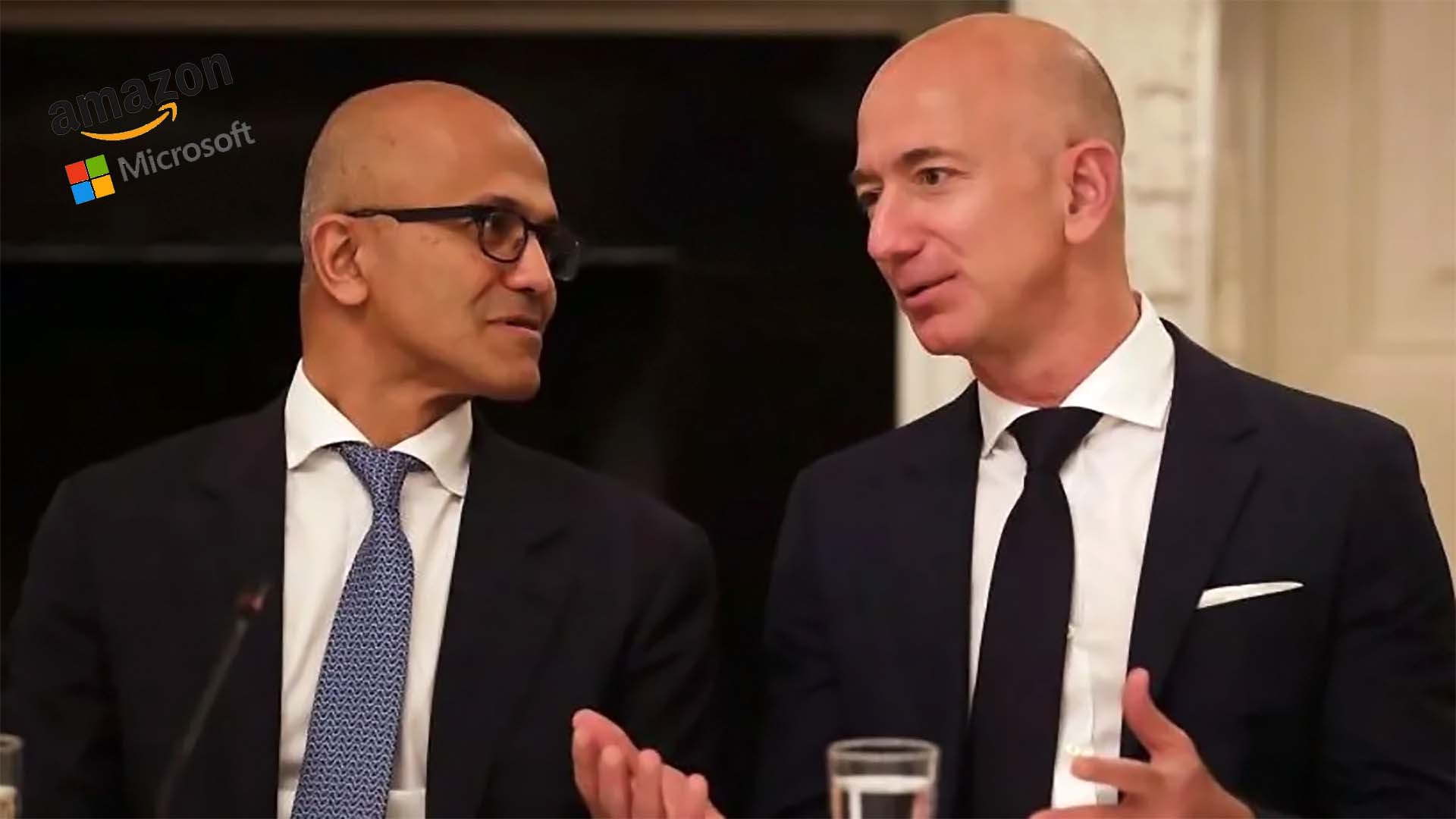
    Amazon and Microsoft have announced a plan to invest a total of $52.5 billion (£39.4 billion) in India over the coming years.

    Amazon will invest $35 billion by 2030 to support AI-driven digital technology, boost exports, and create jobs. This announcement follows Microsoft’s commitment of $17.5 billion to strengthen India’s AI development.

    India is becoming a center for AI and cloud technology, attracting many global tech investments. In October, Google said it would invest $15 billion to create an AI data hub. Earlier this week, Intel announced it will work with Tata Electronics in Mumbai, which is part of Tata’s $14 billion plan for semiconductor manufacturing.

    Indian Prime Minister Narendra Modi stated, “When it comes to AI, the world is optimistic about India,” in a post on X after meeting Microsoft CEO Satya Nadella on Tuesday.

    Amazon’s investment of $35 billion will build on the $40 billion it has already invested in India, establishing the company as “the largest foreign investor” in the country, according to a company statement.

    A significant portion of this new investment will be directed toward developing local cloud and AI infrastructure.

    HyperScale Cloud Region

    Microsoft’s recent commitment follows a $3 billion investment announced by the company earlier this year.

    This investment includes the establishment of a new “hyperscale cloud region,” a cluster of data centers, in Hyderabad, southern India, which is set to go live in mid-2026, the company stated.

    Data centers are centralized physical facilities that host computer servers, IT infrastructure, and network equipment. They are a crucial part of the AI value chain that India is focusing on, despite concerns regarding water shortages.

    Additionally, India will gain access to Microsoft’s “sovereign public cloud,” which provides tools to help organizations manage their data and applications while ensuring that sensitive information remains within the country.

    Microsoft is investing $23 billion in AI projects around the world, including Canada, Portugal, and the UAE. This expansion is a way for Microsoft to compete with companies like Amazon and Google.

    The company plans to incorporate AI into Indian government platforms to help about 310 million informal workers.

    These announcements come as India increases its efforts in semiconductor manufacturing. Both state and private projects aim to build a domestic chip-making industry.

    India has a large market for AI, with over a billion internet users and plenty of tech talent. However, it still falls behind leaders like China and the US.

    Despite this, India is attracting billions in investments for essential computing technologies like chips. The government’s semiconductor mission offers generous subsidies to companies that create chip-making facilities.

    India will also reveal its own AI model in February of next year.

  • OpenAI Partners with Amazon in Landmark $38 billion Cloud Computing Deal

    OpenAI Partners with Amazon in Landmark $38 billion Cloud Computing Deal

    As the startup continues to form significant alliances to obtain processing capacity, OpenAI has inked a $38 billion deal with Amazon to utilize its cloud computing infrastructure. The ChatGPT manufacturer inked agreements for over $1 trillion with Oracle, Broadcom, AMD, and the massive chip manufacturer Nvidia in 2025. Its most recent agreement lessens its dependence on Microsoft.

    OpenAI will have access to Nvidia graphics processors to train its AI models as part of the seven-year deal. The agreement comes after OpenAI underwent a comprehensive reorganization last week, moving away from non-profit status and altering its partnership with Microsoft to provide OpenAI greater operational and financial autonomy.

    Sam Altman, CEO and co-founder of OpenAI, stated, “Scaling frontier AI requires massive, reliable compute.” Altman added “Our partnership with AWS [Amazon Web Services] strengthens the broad compute ecosystem that will power this next era and bring advanced AI to everyone.”

    OpenAI, Amazon Ink $38bn AI Deal
    OpenAI Partners with Amazon in Landmark $38 billion Cloud Computing Deal Source: Web

    The agreement illustrates both OpenAI’s haste to obtain the power it requires and the enormous demand for computer power resulting from the increased interest in AI. With the introduction of ChatGPT in 2022, OpenAI introduced AI to the general public, but for years it was dependent on Microsoft for processing power. Before their partnership loosened in January of this year, the two companies had an exclusive cloud deal.

    The AI startup’s initial contract with Amazon’s AWS represents its most recent move away from Microsoft and toward a variety of processing power sources. According to Kim Forrest, chief investment officer of Bokeh Capital Partners, “the deal with AWS shows that OpenAI considers that its path to leadership is paved with getting access to as much computing power as it can get its hands on.”

    Growing Revenue Fast

    Microsoft’s “taking less of a control stake in the company has allowed relationships with near competitors to OpenAI’s funders possible,” she stated. However, because it invests a lot of money to advance AI technology, OpenAI has not been successful. OpenAI lost $12 billion in just the most recent quarter, according to Microsoft’s quarterly earnings released last week.

    AWS is “uniquely positioned to support OpenAI’s vast AI workloads,” according to a statement from AWS CEO Matt Garman. Prominent AI companies have begun making investments in each other, resulting in a complex web of transactions that has drawn attention. The hub of such web is OpenAI.

    Furthermore, there has been some conjecture that an AI bubble might be imminent in response to OpenAI’s acquisition binge. “Yes, the investment loans are unprecedented,” Sam Altman remarked in an interview with the BBC last month, but he also noted that “it’s also unprecedented for companies to be growing revenue this fast.”