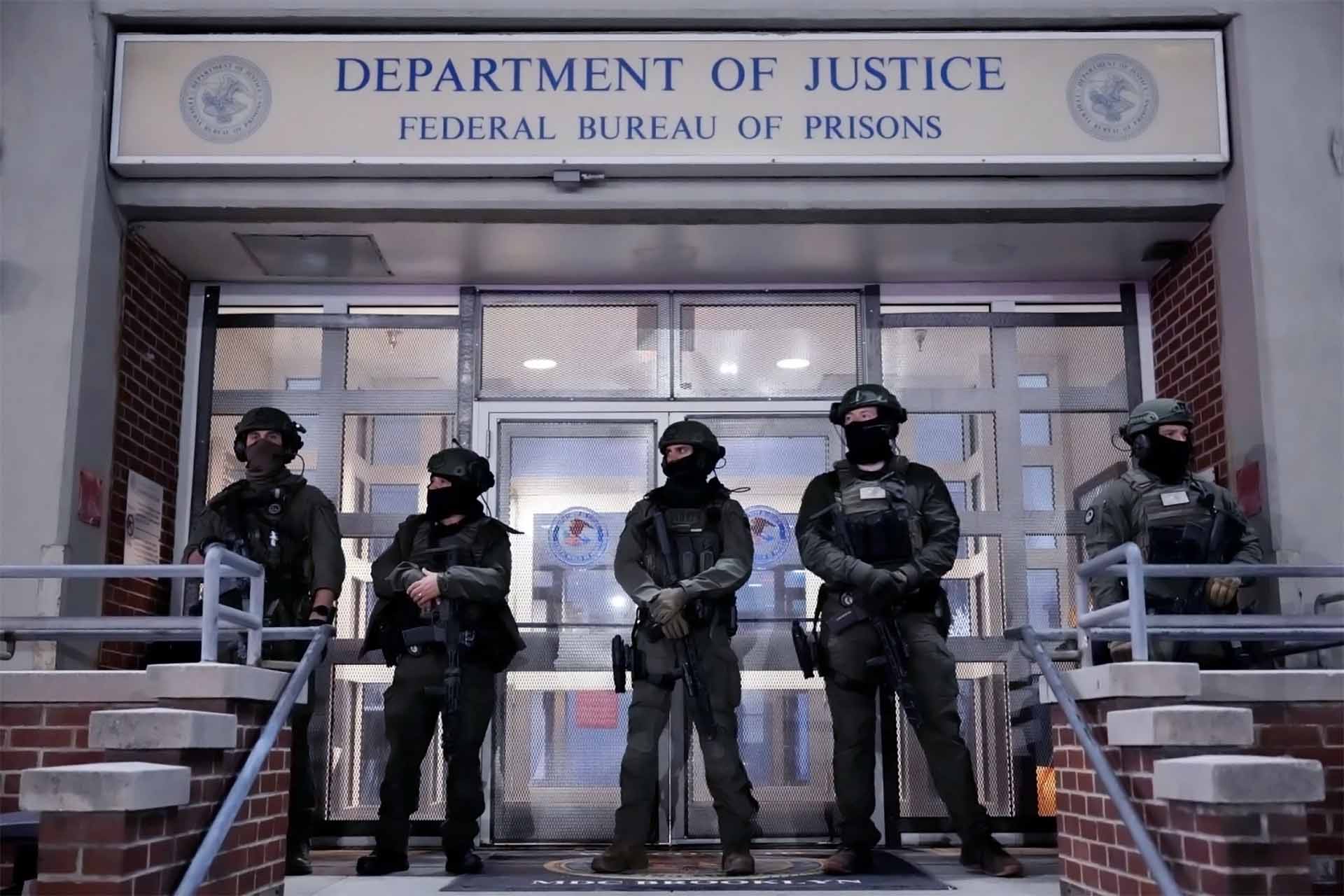
President Nicolás Maduro is currently in custody at a detention center in New York after being captured during U.S. military operations in Venezuela on Saturday.
Maduro and his wife, First Lady Cilia Flores, were transferred from Caracas to the Metropolitan Detention Center in Brooklyn to face charges related to drug trafficking.
Maduro has previously denied that he leads a drug cartel.
In response to the situation, Venezuela has declared a state of national emergency and condemned what it refers to as “military aggression.” Here is an overview of how the U.S. operation unfolded.
President Donald Trump stated that the U.S. intends to “run” Venezuela “until such time as we can achieve a safe, proper, and judicious transition.”
Trump said that U.S. oil companies would fix Venezuela’s infrastructure and help the country make money.
Some observers are worried about this. They think Trump may not really care about creating a democratic and fair future for Venezuela. Instead, they believe he might be focused on taking advantage of its oil wealth, as reported by correspondent Tom Bateman.
Maduro’s Accusations Against the Trump Administration
Maduro says that Trump wanted to get rid of him so he could take Venezuela’s oil. After the U.S. took an oil tanker near Venezuela, Trump said, “I think we will keep the oil.”
However, U.S. officials have repeatedly denied Maduro’s claims. They say their actions against his government were not meant to access Venezuela’s untapped oil reserves.
As reported by my colleague, Venezuela possesses the world’s largest proven crude oil reserves, and profits from the oil sector account for more than half of its government budget. Unfortunately, the country’s oil exports have suffered due to sanctions, a lack of investment, and mismanagement within its state-run oil company.
In 2023, Venezuela produced only 0.8% of global crude oil, according to the U.S. Energy Information Administration (EIA). Currently, it exports approximately 900,000 barrels of oil per day, with China being its largest buyer.
Venezuela Oil is Likely to Play a Crucial Role
U.S. President Trump has made it clear that he wants the United States to have access to Venezuela’s oil fields. The country boasts an estimated 300 billion barrels of oil reserves, making it the largest on Earth. Although most of this oil is extra-heavy crude, which is costly and difficult to extract, Venezuela remains the fifth-largest exporter of oil globally.
Despite an increasing number of U.S. Navy vessels being stationed in the Caribbean Sea, Venezuela still managed to send nearly a million barrels of oil per day to China, southern Europe, and the U.S. last month. However, oil production has been significantly affected in recent years due to political unrest. For decades, the state-owned oil and natural gas company, Petróleos de Venezuela, has faced strikes and accusations of poor safety standards.
The U.S. has accused President Maduro of using oil revenues to fund drug trafficking, while Maduro has accused Washington of seeking to control Venezuela’s oil reserves. Fortunately, the oil fields appear to have escaped damage from recent airstrikes. Regardless of what lies ahead for Venezuela, its oil industry is likely to continue playing a vital role.
Leave a Reply