Category: White House

  • Democratic Representative Steny Hoyer is retiring from Congress

    Democratic Representative Steny Hoyer is retiring from Congress

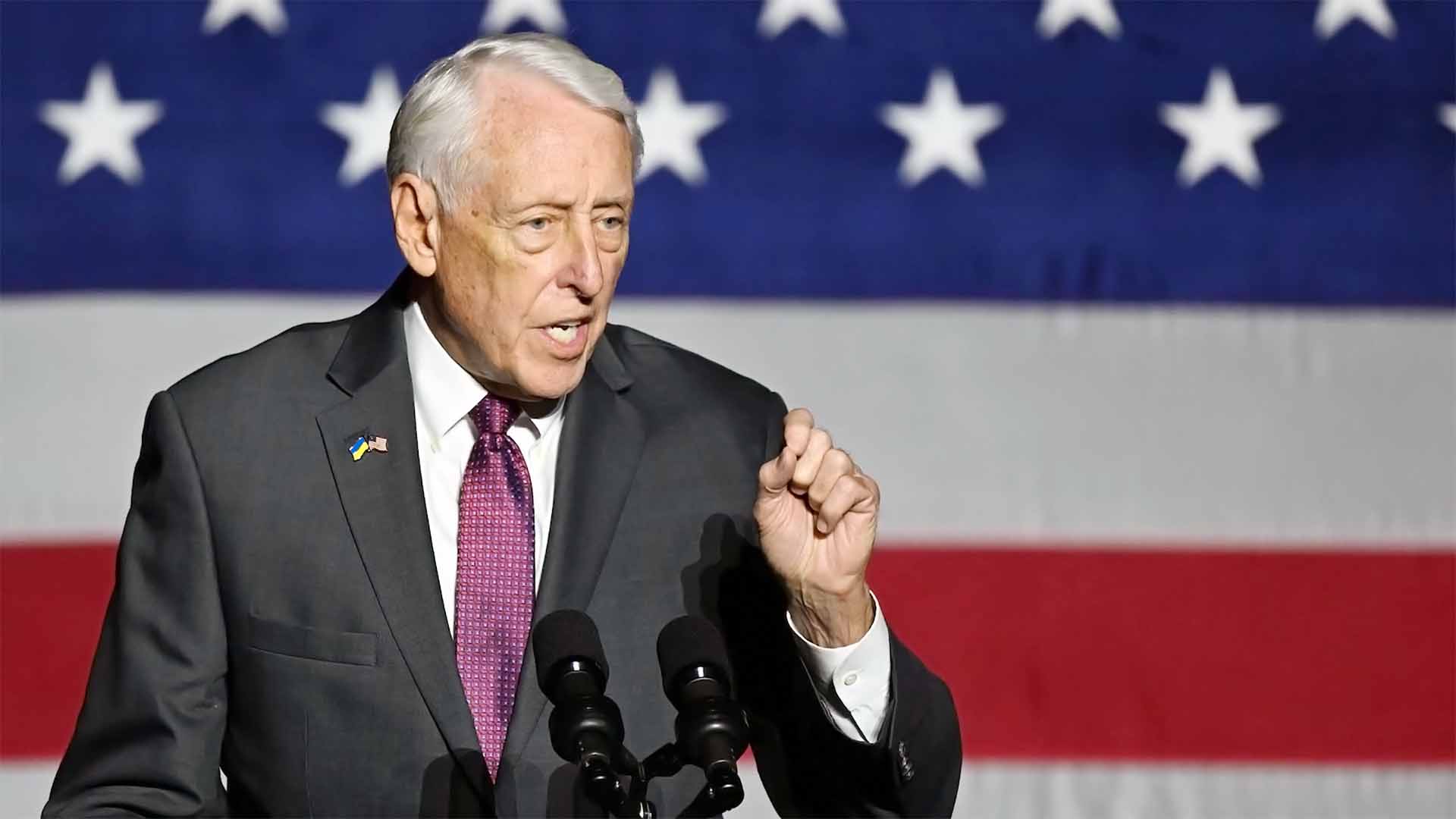
    Maryland Democratic Representative Steny Hoyer will announce his retirement on Thursday after serving in Congress for over 40 years.

    At 86 years old, Hoyer told The Washington Post that he decided to leave the House after talking with his family during the holidays.

    Hoyer is the third-longest-serving member of the House. He said, “I did not want to be one of those members who clearly stayed too long and lost the ability to do the job.”

    The former House majority leader will make his official retirement announcement in a speech on the House floor on Thursday.

    Unlike many other members who have left Congress feeling frustrated with the political situation, Hoyer said he still loves the institution.

    He noted that his constituents often ask when Congress will work better. He explained, “As long as Americans elect angry, confrontational people, don’t be surprised when Congress is angry and confrontational too.”

    Hoyer expressed concern about the decline of American politics over the years. He blamed much of it on former President Donald Trump, especially regarding Trump’s pardons for people involved in the January 6, 2021, attack on the U.S. Capitol.

    He said, “His greatest strength is that he has no shame, and his supporters seem indifferent to his actions, including pardoning 1,600 people who committed treason. It’s astounding that he gets away with it.”

    About Hoyer Career

    Steny Hoyer spent over a decade in the Maryland state Senate before moving to the U.S. House of Representatives. He was elected to Congress in 1981 through a special election. During his time in Congress, he held key roles such as House Democratic Whip, Deputy Majority Whip, and Chair of the Democratic Caucus.

    Hoyer had a talent for passing important laws through divided groups, including the Americans with Disabilities Act in 1990.

    In 2023, Hoyer stepped back from leadership roles, along with Nancy Pelosi and Jim Clyburn, who also left their positions as House Speaker and Majority Whip. This change marked a generational shift for the Democratic Party in the House.

    Hoyer told CNN’s Dana Bash, “I think all of us have been around for some time and have a good sense of the timing of decisions. We all felt this was the right time.”

    In an interview with the Washington Post, Hoyer praised Pelosi, who announced she would not run for reelection after nearly 40 years in Washington. He described her as “tough as nails” and said she was the best of the ten speakers he worked with during his time in Congress.

    “Sure, I would have loved to have been Speaker. Who wouldn’t want to be Speaker? But I don’t have deep regrets,” he told the paper.

  • US to Takeover Greenland Using Military – White House

    US to Takeover Greenland Using Military – White House

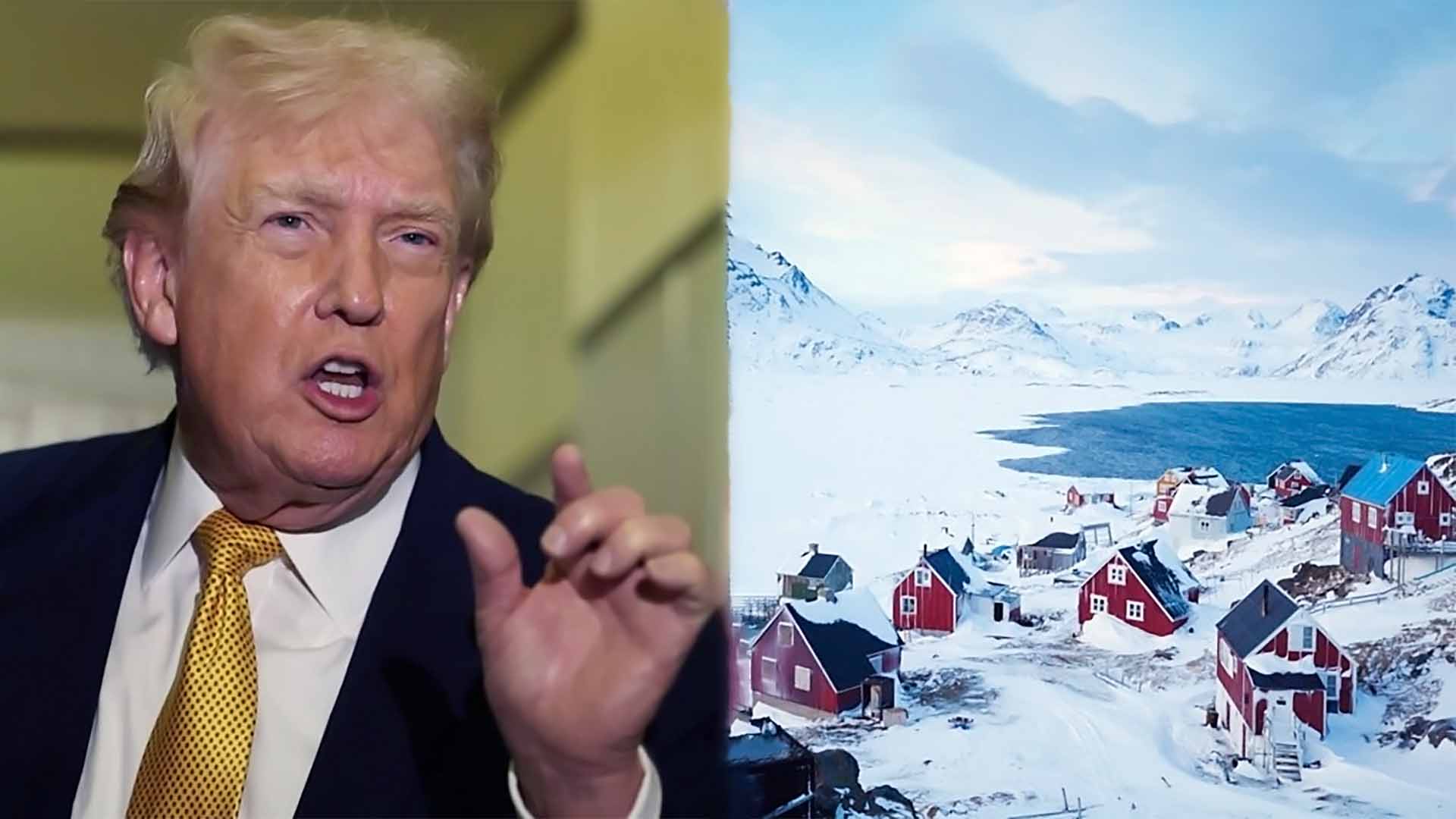
    U.S. President Donald Trump is considering different ways to acquire Greenland, including possible military action. The White House has stated that gaining control of Greenland, which is a semi-autonomous part of Denmark, is important for national security.

    This statement came after European leaders expressed their support for Denmark, which has been rejecting Trump’s plans for the Arctic Island.

    Trump said over the weekend that the U.S. “needed” Greenland for security. Danish Prime Minister Mette Frederiksen warned that any U.S. attack would threaten the future of NATO.

    On Tuesday, the White House said, “The president and his team are looking at various options to achieve this important foreign policy goal, and using the U.S. military is always an option for the commander-in-chief.”

    NATO is a military alliance where member countries support each other in case of attacks.

    Trump Has No Plans to Take Over Greenland – Rubio

    US Secretary of State Marco Rubio told lawmakers on Monday that the Trump administration did not plan to invade Greenland. Instead, he talked about the idea of buying the island from Denmark, according to the Wall Street Journal and other U.S. media.

    On Tuesday, a State Department spokesperson said that the U.S. wants to create lasting business relationships that benefit Americans and the people of Greenland.

    The spokesperson added that the United States, Denmark, and NATO allies share concerns about increasing activity from common adversaries in the Arctic.

    Greenland and Denmark have asked to meet with Rubio soon to discuss U.S. claims about the island. Denmark’s Foreign Minister, Lars Løkke Rasmussen, said talking with America’s top diplomat should help clear up “certain misunderstandings.”

    On the same day, six European allies showed support for Denmark. They stated that “Greenland belongs to its people, and only Denmark and Greenland can decide on matters concerning their relations.”

    The European leaders emphasized that they also care about security in the Arctic. They believe this security must be achieved together with NATO allies, including the U.S. They also urged everyone to follow the principles of the UN Charter, including respecting sovereignty, territorial integrity, and the inviolability of borders.

    Respectful Dialogue

    Greenland’s Prime Minister, Jens-Frederik Nielsen, praised a recent statement and called for “respectful dialogue.”

    He said, “The dialogue must respect Greenland’s status, which is based on international law and the principle of territorial integrity.”

    Concerns about Greenland’s future arose after the U.S. military intervened in Venezuela. U.S. troops captured President Nicolás Maduro and took him to face drug and weapons charges in New York.

    A day later, Katie Miller, the wife of one of Trump’s senior aides, shared a map of Greenland in the colors of the U.S. flag on social media with the word “SOON.”

    On Monday, her husband, Stephen Miller, stated that it was the “formal position of the U.S. government that Greenland should be part of the U.S.”

    When asked during a CNN interview if the U.S. would rule out using force to take Greenland, Miller replied, “Nobody’s going to fight the U.S. over the future of Greenland.”

    Greenland has about 57,000 residents and has enjoyed self-government since 1979, although Denmark still controls its defense and foreign policy.

    Most Greenlanders want independence from Denmark, but many do not support becoming part of the U.S., where a military base already exists.

    Morgan Angaju, a 27-year-old Inuit from Ilulissat in western Greenland, expressed his fears, saying, “It was terrifying to hear the leader of the free world laughing at Denmark and Greenland and talking about us as if we are something to be claimed.”

    He highlighted, “We are already claimed by the Greenlandic people,” explaining that “Kalaallit Nunaat” means “the land of the Greenlandic people.”

    Angaju is also worried about what might happen next. He wonders if Greenland’s Prime Minister could face a similar fate to Maduro or if the U.S. might “invade our country.”

  • Role of Congress Questioned as Democrats Pledge to Rein in Trump over Venezuela

    Role of Congress Questioned as Democrats Pledge to Rein in Trump over Venezuela

    It has become a common pattern: U.S. presidents take military action abroad without Congress’s approval, and Congress often does nothing in response.

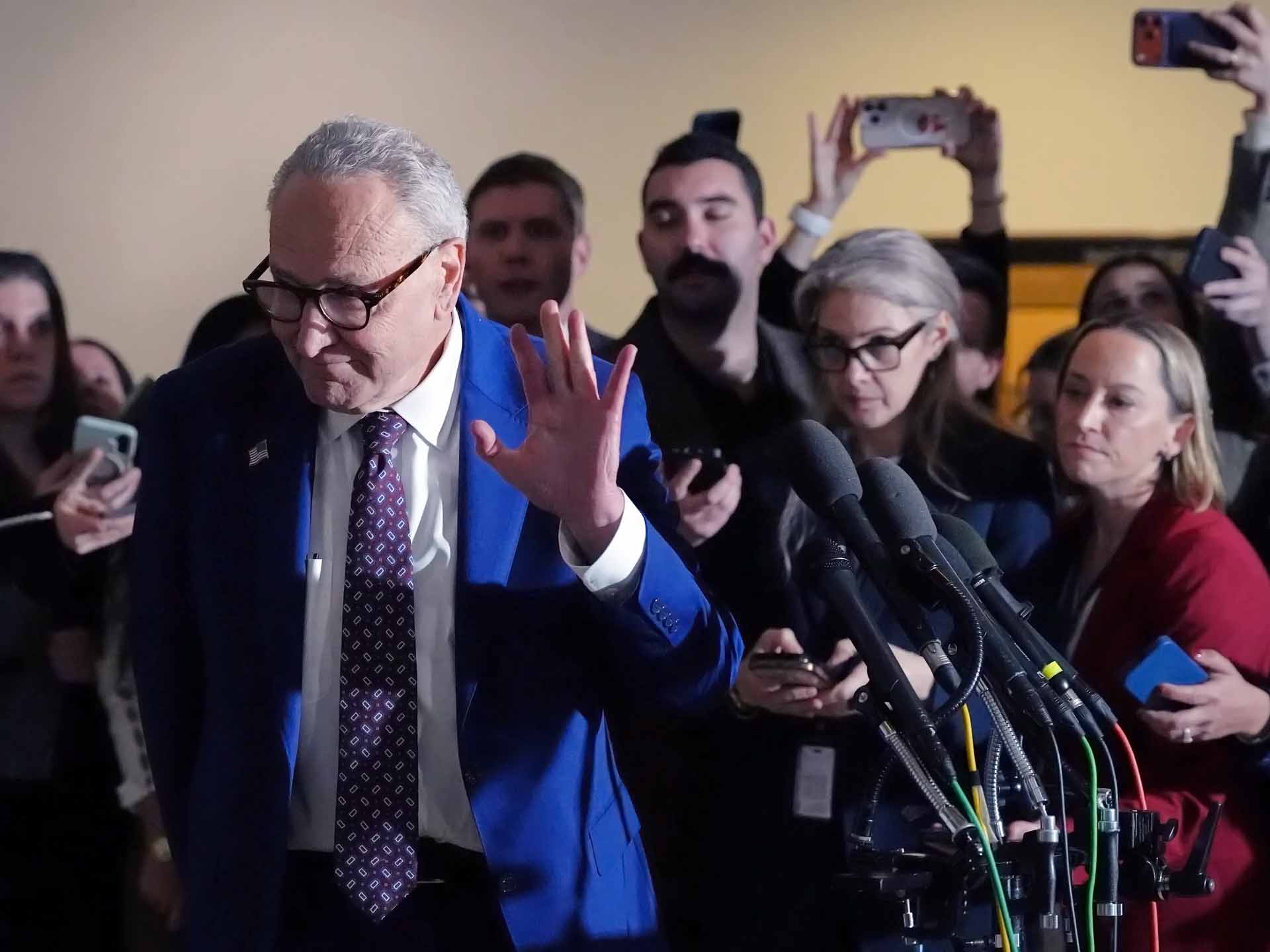
    Recently, the U.S. military abducted Venezuelan leader Nicolas Maduro. This has led Senate Democrats to pledge to introduce a resolution to limit President Donald Trump’s military actions. Chuck Schumer, the Senate’s top Democrat, said they will push for a vote within the week, though it may not succeed.

    Since Trump began his second term in 2025, Congress has considered several bills to require him to get approval before launching military strikes. The recent attack on Venezuela shows a clear example of presidential overreach, which experts believe needs Congress to take action. David Janovsky, acting director of the Constitution Project at the Project on Government Oversight, emphasizes this point.

    Janovsky notes that under the U.S. Constitution, only Congress has the power to approve military action. He also points out that the attack on Venezuela goes against the UN Charter, which is considered law in the United States.

    He added, “Past justifications for unilateral military action by presidents simply do not apply here. This is particularly bold.”

    The Struggle Ahead

    Since August, the Trump administration has planned to increase its efforts against Venezuela.

    In August, Trump reportedly signed a secret memo asking the U.S. military to prepare for action against criminal networks abroad. Then, on September 2, the administration began launching strikes on boats suspected of drug smuggling off the coasts of Venezuela and Colombia.

    Many condemned this bombing campaign as a violation of international law and as undermining Congress’s power. It happened alongside an increase in U.S. military presence near Venezuela.

    Trump also suggested that the military campaign could soon target drug trafficking in Venezuela itself. “When they come by land, we’re going to stop them the same way we stopped the boats,” Trump said on September 16.

    These strikes led to two votes in the House of Representatives in December. One vote would require Congress to approve any land strikes on Venezuela, while the other would force Trump to seek approval for strikes on drug-smuggling boats.

    Both resolutions failed to pass, mostly along party lines. A similar resolution in the Senate, which aimed to require Congress’s approval for more attacks, also did not pass in November.

    After the recent U.S. operation on Saturday, Senator Tim Kaine spoke to reporters. He hoped that Trump’s bold actions in Venezuela would encourage lawmakers to take action.

    Kaine said Republicans can no longer treat Trump’s military buildup in the Caribbean and his threats as simple “bluffs” or “negotiating tactics.”

    “It’s time for Congress to get serious and do its job,” Kaine stated.

    In an interview with CNN’s Dana Bash, US Senator Chris Murphy agreed that Congress has become weak on war matters. This issue has been seen in both Democratic and Republican administrations.

    Bash pointed out that former President Barack Obama’s 2011 military action in Libya occurred without Congress’s approval.

    Republicans Are Indifferent About Resolutions

    Under the U.S. Constitution, Congress has the sole power to declare war, which it has not done since World War II.

    Instead, lawmakers have often used Authorizations for Use of Military Force (AUMFs) to approve sending troops to recent wars, such as those in Iraq and Afghanistan and for strikes against alleged al-Qaeda members in the Middle East, Africa, and Asia.

    So far, no AUMFs have been passed for military action in Venezuela.

    If lawmakers think the president is acting beyond their legal power, they can pass a war powers resolution. This resolution requires Congress to approve any further military actions.

    These resolutions are mostly symbolic, but they give a legal basis to challenge the president’s actions in court. However, they are hard to pass since two-thirds of both chambers of Congress must agree to override a presidential veto.

    With the current Congress, passing a war powers resolution would likely need support from both parties.

    Republicans have narrow majorities in the House and Senate, so some members of Trump’s party would need to support the resolution for it to pass.

    In November’s Senate vote, only two Republicans, Rand Paul from Kentucky and Lisa Murkowski from Alaska, voted in favor. The resolution failed with a vote of 51 to 49.

    In December, a similar vote in the House only received 211 votes in favor and 213 against. In that vote, three Republicans supported the resolution while one Democrat opposed it.

  • World Responds to US Bombing Venezuela & Maduro’s ‘Capture’

    World Responds to US Bombing Venezuela & Maduro’s ‘Capture’

    United States President Donald Trump announced that the U.S. conducted a “large-scale strike” against Venezuela and its leader, President Nicolas Maduro.

    In a post on Truth Social, Trump said that Maduro and his wife were captured and flown out of the country after an operation conducted with U.S. law enforcement.

    The strikes happened inside Venezuela early on Saturday, marking a serious escalation that many Venezuelans had feared for weeks.

    U.S. media outlets, including Fox News and CBS News, reported on the strikes against the South American country.

    In a statement on X, U.S. Deputy Secretary of State Christopher Landau proclaimed that Venezuela was experiencing a “new dawn.” He stated, “A new dawn for Venezuela! The tyrant is gone. He will now – finally – face justice for his crimes.”

    In an initial response, Maduro accused the U.S. of “extremely serious military aggression.” His government declared, “Venezuela rejects, repudiates, and denounces before the international community the extremely serious military aggression perpetrated by the current government of the United States of America against Venezuelan territory and people.”

    Other countries are also reacting to the attack.

    Cuba

    Cuban President Miguel Diaz-Canel condemned the United States on social media. He accused the U.S. of carrying out a “criminal attack” against Venezuela and called for an urgent international response. In a post on X, Diaz-Canel stated that Cuba’s so-called “zone of peace” was being “brutally assaulted,” labeling the US action as “state terrorism” directed not only at the Venezuelan people but at “Our America” more broadly. He concluded his statement with the revolutionary slogan, “Homeland or Death, We Shall Overcome.” Additionally, a statement released by various Cuban embassies worldwide denounced the US military attack against Venezuela and demanded an urgent reaction from the international community, describing the attack as “state terrorism.”

    Chile

    Chilean President Gabriel Boric Font expressed his government’s “concern and condemnation” of the US military actions in Venezuela in a statement posted on X. He called for a peaceful resolution to the serious crisis affecting the country, reaffirming Chile’s commitment to fundamental principles of international law, such as the prohibition of the use of force, non-intervention, the peaceful settlement of international disputes, and the territorial integrity of states. Boric stated, “The Venezuelan crisis must be resolved through dialogue and the support of multilateralism, not through violence or foreign interference.”

    Mexico

    In a statement on X, Mexican President Claudia Sheinbaum Pardo condemned the military intervention in Venezuela. She included an article from the UN Charter that states, “Members of the Organization must not threaten or use force against any state’s land or political freedom. They should also avoid actions that go against the goals of the United Nations in their international relations.”

    Trinidad and Tobago

    “Earlier this morning, Saturday, January 3, 2026, the United States commenced military operations in the territory of Venezuela. Trinidad and Tobago is NOT a participant in any of these ongoing military operations. We continue to maintain peaceful relations with the people of Venezuela,” Prime Minister Kamla Persad-Bissessar said in a statement.

    Iran

    In a statement posted on X, Supreme Leader Ayatollah Ali Khamenei stated, “What’s important is that when one realizes an enemy wants to impose something on one’s government or nation with false claims, they must stand firmly against that enemy.”

    “We won’t yield to them. With reliance on God and the confidence of the people’s support, we will bring the enemy to its knees,” he added.

    Russia

    Moscow is very concerned and has condemned what it calls an “act of armed aggression” by the United States against Venezuela, according to the Russian Ministry of Foreign Affairs. The ministry emphasized that it is important to prevent further escalation and to focus on resolving the issue through dialogue.

    The ministry emphasized that “Venezuela must be guaranteed the right to determine its own destiny without any destructive military intervention from outside. We reaffirm our solidarity with the Venezuelan people and support for their leadership’s policy of defending the country’s national interests and sovereignty,” it added. The ministry also expressed extreme concern about the capture of President Maduro and his wife, stating that such actions constitute an unacceptable violation of the sovereignty of an independent state.

    United States

    In a statement posted on X, U.S. Attorney General Pam Bondi announced that Maduro and his wife have been indicted in the Southern District of New York. “Nicolas Maduro has been charged with narco-terrorism conspiracy, cocaine importation conspiracy, possession of destructive devices and machine guns, and conspiracy to possess machine guns and destructive devices against the United States. They will soon face the full force of American justice in American courts,” she said.

    Meanwhile, Republican Senator Mike Lee announced that the U.S. has completed its military action in Venezuela following the capture of Maduro. He said he anticipates no further action now that Maduro is in U.S. custody, stating this after a telephone call with U.S. Secretary of State Marco Rubio.

    United Kingdom

    British Prime Minister Keir Starmer stated that the UK was not involved in the United States’ strikes on Venezuela and expressed his intent to speak with President Trump to gather the full facts of what had occurred. “I want to establish the facts first. I want to speak to President Trump. I want to speak to our allies. I can be absolutely clear that we were not involved … and I believe we should all uphold international law,” he said in a statement to British broadcasters.

    European Union

    The EU High Representative for Foreign Affairs and Security Policy, Kaja Kallas, stated that she has spoken with US Secretary of State Marco Rubio and the EU ambassador in Caracas regarding the latest developments in Venezuela.

    “The EU is closely monitoring the situation in Venezuela,” Kallas said in a statement on X. “The EU has repeatedly asserted that Mr. Maduro lacks legitimacy and has advocated for a peaceful transition. Under all circumstances, the principles of international law and the UN Charter must be respected. We call for restraint. The safety of EU citizens in the country is our top priority.”

    Germany

    In a statement to the AFP news agency, Germany’s foreign ministry expressed that it is “monitoring the situation in Venezuela very closely and following the latest reports with great concern.” The foreign ministry added that it is in close contact with the embassy in Caracas and that the government’s crisis team is in session, coordinating closely with its partners.

    Italy

    Prime Minister Giorgia Meloni indicated that she is “closely monitoring the situation in Venezuela,” with the goal of “gathering information about our fellow citizens” in the country. Meloni mentioned that she is in constant contact with Italy’s Foreign Minister, Antonio Tajani. Approximately 160,000 Italians currently reside in Venezuela, most of whom hold dual citizenship.

    Indonesia

    Indonesia is keeping an eye on developments in Venezuela to ensure the safety of its citizens, stated Foreign Ministry Spokesperson Yvonne Mewengkang. “Indonesia also calls on all relevant parties to prioritize a peaceful resolution through de-escalation and dialogue while focusing on the protection of civilians. Indonesia emphasizes the importance of respecting international law and the principles of the UN Charter.”

  • US Cuts UN Humanitarian Aid To $2bn Amid Trump Demands for Reforms

    US Cuts UN Humanitarian Aid To $2bn Amid Trump Demands for Reforms

    The United States will contribute only $2 billion in humanitarian aid to the United Nations. This is a small amount compared to what the U.S. usually provides. The Trump administration is cutting back on foreign aid significantly.

    This new commitment, announced on Monday, is much lower than the up to $17 billion the U.S. has given in recent years as the UN’s main supporter. About $8 to $10 billion of that was voluntary funding, according to U.S. officials.

    Critics have strongly criticized these cuts, stating they lead to more deaths and hunger as millions of people around the world lose access to food, shelter, and basic aid.

    The $2 billion will be used for specific countries or crises, with 17 countries targeted at first. These include Bangladesh, the Democratic Republic of the Congo, Haiti, Syria, and Ukraine.

    Afghanistan and Palestine are not on this list. Officials say that aid for Palestine will come from funding related to Trump’s upcoming Gaza plan.

    Negative Consequences as Western Countries Reduce Aid

    Earlier this month, the United Nations (UN) asked for $23 billion in funding for 2026, but this is only half of what it needs. Western countries have cut their aid, which has led to these funding shortages.

    In June, the UN warned it would need to reduce its programs significantly because of the largest funding cuts ever in international aid.

    The Trump administration has weakened the main U.S. agency that provides foreign aid, the U.S. Agency for International Development (USAID). They have told UN agencies to “adapt, shrink, or die” in response to these changes.

    Other Western countries, including Germany, have also decreased their funding. The effects of these cuts are being felt quickly in the Middle East, South Asia, and Africa.

    In July, the UN High Commissioner for Refugees (UNHCR) said over 11 million refugees would lose access to aid. At that time, the agency had received only 23% of its $10.6 billion budget and expected its total budget to drop to $3.5 billion by the end of the year, which is not enough to help 122 million people.

    Basic services for Rohingya refugees in Bangladesh are in danger of collapsing, and education for more than 230,000 Rohingya children is likely to stop.

    The UN also predicted a rise in deaths from HIV/AIDS by 2029 due to the funding cuts. Additionally, the charity Doctors Without Borders reported that over 650 children have died from malnutrition in Nigeria because of the lack of international aid.

    Regulate the Spigot

    A senior U.S. official, speaking anonymously, told The Associated Press that the U.S. will provide $2 billion as part of a larger plan. In this plan, the UN humanitarian agency (OCHA) will manage the distribution of funds.

    The Trump administration wants UN agencies to have stronger leadership and authority, according to the official.

    OCHA chief Tom Fletcher has previously criticized the lack of international response to rising humanitarian needs, saying his agency is under pressure.

    Despite this, Fletcher praised the $2 billion agreement, stating that the U.S. is showing it can be a leader in humanitarian efforts.

  • Trump Recalls Many Career Diplomats Amidst an ‘America First’ Initiative

    Trump Recalls Many Career Diplomats Amidst an ‘America First’ Initiative

    The United States government is recalling many ambassadors and senior diplomats to make sure embassies are in line with President Donald Trump’s “America First” priorities. Some people believe this will harm the country’s reputation globally.

    The State Department did not share a list of the diplomats being recalled. However, a senior official told Reuters that this action is normal for any administration. The official explained that an ambassador represents the president.

    “It is the president’s right to have people in these countries who support the America First agenda,” the official said, speaking anonymously.

    Sources informed Reuters that nearly 30 senior diplomats from smaller countries are among those ordered back to Washington. These diplomats usually come from the apolitical Foreign Service and have been notified about their upcoming departures.

    Senior Diplomats Started Receiving Notices

    The Associated Press reported that senior diplomats from at least 29 countries started receiving notices on Wednesday about their departures. Politico first reported that two dozen ambassadors were told to leave their posts.

    The American Foreign Service Association, representing Foreign Service officers, released a statement on its Facebook page. It said it had heard credible reports that several career ambassadors appointed during the Biden administration were ordered to return by January 15 or 16 without any explanation for the move.

    “Abrupt and unexplained recalls show a harmful pattern of undermining and politicization. This affects morale, effectiveness, and U.S. credibility abroad,” said spokesperson Nikki Gamer in an email referenced by Reuters.

    Ambassadors serve at the president’s discretion and usually stay in their positions for three to four years. Those affected by this change will not lose their jobs but will return to Washington for other assignments if they choose to accept them.

    The news agency noted that Africa will be most impacted, with ambassadors from 13 countries being recalled: Burundi, Cameroon, Cape Verde, Gabon, Ivory Coast, Madagascar, Mauritius, Niger, Nigeria, Rwanda, Senegal, Somalia, and Uganda.

    Ambassador changes are also happening in Fiji, Laos, the Marshall Islands, Papua New Guinea, the Philippines, Vietnam, Armenia, Macedonia, Montenegro, Slovakia, Algeria, Egypt, Nepal, Sri Lanka, Guatemala, and Suriname.

    Jeanne Shaheen, a leading Democrat on the U.S. Senate Committee on Foreign Relations, said on X that Trump is “giving away U.S. leadership to China and Russia by removing qualified career ambassadors who serve faithfully no matter who is in power.”

    “This makes America less safe, less strong, and less prosperous,” she added.

  • White House Accuses South Africa of Harassing US Staff

    White House Accuses South Africa of Harassing US Staff

    The administration of U.S. President Donald Trump has initiated a sharp and critical assault on the South African government, accusing its officials of egregious harassment and doxxing of staff members who are involved in assisting white Afrikaners in their relocation efforts.

    On Thursday, U.S. Secretary of State Marco Rubio made these serious allegations in a statement, a day following South Africa’s expulsion of seven Kenyan nationals. These individuals had entered the country with U.S. support in order to facilitate the processing of Afrikaner relocations.

    The South African government has stated that these individuals were in the country on tourist visas, which means they cannot work and raises questions about what they were doing.

    Rubio expressed serious concerns, saying that U.S. citizens had been briefly detained during the unrest, an action that Washington strongly condemns. He highlighted that some personal information about U.S. officials was leaked, which is a big problem and might put them in danger. Rubio said that if South Africa doesn’t punish the people who did this, it could hurt their relationship with the U.S.

    The South African government said that no U.S. officials were arrested during the raid. They also mentioned that hiring people in the U.S. without the right papers is a serious issue.

    South African President Denied Accusations

    For months, the Trump administration has pressured South African President Cyril Ramaphosa’s government. It has accused Ramaphosa’s administration of allowing the persecution of white Afrikaner farmers in a country dealing with complicated land ownership issues. These claims have mostly spread within far-right groups but are now getting more attention.

    Ramaphosa has strongly denied these accusations. Key elected officials, including leaders from the Afrikaner community, have called the allegations harmful misinformation. This was discussed at a lively gathering at the White House in May.

    The Trump administration has continued to facilitate the relocation of members of the Afrikaner community through the U.S. refugee program, even as it has drastically curtailed refugee admissions for nearly all other nationalities. This reduction has plummeted to a historic low of 7,500 for 2026, a move that various human rights organizations have fiercely criticized as blatant racism.

    Additionally, the Trump administration has escalated tensions by expelling South Africa’s ambassador to the U.S., boycotting the G20 summit held in Johannesburg, and excluding South Africa from participating in next year’s event in Miami, further straining diplomatic relations between the two nations.

  • Trump Asked Xi to Release Hong Kong Media Tycoon Jimmy Lai

    Trump Asked Xi to Release Hong Kong Media Tycoon Jimmy Lai

    U.S. President Donald Trump has appealed to Chinese President Xi Jinping to release Jimmy Lai, a Hong Kong media tycoon imprisoned for his pro-democracy views. Trump is worried about Lai’s health since he is 78 years old and was recently convicted.

    On Monday, Hong Kong’s High Court found Lai guilty on three charges related to a national security trial. Rights groups condemned this ruling, calling it a major setback for press freedom in Hong Kong.

    Prosecutors claimed that Lai conspired to get foreign governments to act against Hong Kong or China and published materials that stirred up distrust towards Chinese authorities. Lai pleaded not guilty and now faces a possible life sentence.

    “I talked to President Xi and asked him to consider releasing Jimmy Lai,Trump told reporters. He did not say when he made this request.He’s an older man, and he’s not well. I put that request out there, and we’ll see what happens,Trump said.

    Trump met Xi in October in South Korea, where he likely brought up Lai’s case. After Trump’s comments, U.S. Secretary of State Marco Rubio said the verdict showed that Beijing wants to silence dissent.

    Rubio pointed out that the conviction highlights China’s efforts to suppress freedom of speech and other basic rights.

    Lai started the now-closed pro-democracy newspaper Apple Daily and has become a key target under Hong Kong’s national security law. “Reports say Mr. Lai’s health has worsened after spending over 1,800 days in prison,Rubio stated.We urge authorities to end this ordeal and release Mr. Lai for humanitarian reasons.”


    The United Kingdom also criticized Lai’s conviction, calling it politically motivated, and demanded his immediate release.

    Lai, a British citizen, has been detained since late 2020. His son, Sebastien, stated that the UK should increase pressure on Beijing.It’s time to turn words into actions and make my father’s release a condition for better relations with China,his son said at a news conference in London.


    Lai’s Daughter to Quit Politics After His Release from Jail


    Lai’s daughter, Claire, said that if her father were released from prison, he would stop being politically active. “He just wants to reunite with his family. He wants to serve our Lord and spend the rest of his days with his family,she told the Associated Press in Washington.

    “My father is fundamentally not a man who breaks the law,she added.

    Lai is a devout Catholic who has support in the U.S. from democracy advocates, press freedom groups, and Christian activists. This group is an important part of Trump’s political base.

    In 2021, Lai’s newspaper, Apple Daily, had to close because it reported critically on the government. This was a major change for the media in Hong Kong. Since then, news organizations have been less critical of China because they are afraid of being prosecuted in Hong Kong. As a result, Hong Kong’s global press freedom ranking has dropped to 140th out of 180 countries, according to the group RFA.

    “Even though we expected this verdict, when the news came out, it felt final,said Edward Li, a former editor at Apple Daily who now lives in Taiwan. “Hong Kong no longer has Apple Daily, and it lacks a strong voice to criticize and monitor the government. This is why we feel the need to fill that role,Li said.

  • US Sanctions Maduro’s Family & Ships For Moving Venezuelan Oil

    US Sanctions Maduro’s Family & Ships For Moving Venezuelan Oil

    The United States has announced new sanctions on shipping companies and ships that it says help move Venezuelan oil. This action puts more pressure on a key support system for President Nicolás Maduro’s government. This announcement came just a day after authorities seized a sanctioned tanker off the country’s coast that was likely carrying millions of dollars’ worth of oil.

    Included in the sanctions list released by the U.S. Treasury on Thursday are three nephews of Maduro’s wife, Cilia Flores, along with another businessman affiliated with Maduro. Notably, two of the sanctioned nephews had previously been convicted of drug trafficking charges in the U.S. before being released as part of a prisoner swap.

    The Treasury stated that these six vessels were engaged in “deceptive and unsafe shipping practices,” which contributed financial resources to Maduro’s government. Four of the vessels are flagged under Panama, while the other two are registered in the Cook Islands and Hong Kong.

    This action further escalates the Trump administration’s ongoing pressure campaign against Venezuela. This campaign has included deploying thousands of troops and a carrier strike group to the Caribbean, conducting strikes on suspected drug boats, and issuing repeated threats against Maduro.

    On Wednesday, armed U.S. personnel seized an oil tanker in international waters off the Venezuelan coast. This tanker was allegedly involved in an “illicit oil shipping network” that supports countries, including Venezuela and Iran, according to Attorney General Pam Bondi.

    Venezuela possesses the world’s largest known reserves of crude oil, but international sanctions and a severe economic crisis have severely impacted the country’s oil industry. Despite this, the state-owned oil and natural gas company PDVSA remains the primary source of revenue for Maduro’s cash-strapped government, largely due to a network of clandestine vessels that smuggle Venezuelan oil into global supply chains.

    Targeted Tankers Headed to Cuba

    The seized tanker was en route to Cuba and carrying Venezuelan crude when it was intercepted by U.S. forces. This occurred around the same time Venezuelan opposition leader and Nobel laureate Maria Corina Machado arrived in Oslo after defying a travel ban and fleeing the country.

    Previously named Adisa, the tanker was sanctioned by the U.S. in 2022 for facilitating oil trades on behalf of Hezbollah and Iran’s Islamic Revolutionary Guard Corps-Quds Force.

    The ship’s skipper had concealed its true location while docked at a Venezuelan oil terminal last month, according to satellite and shipping data reviewed by CNN. Although the tanker was flying a Guyana flag, it was not registered in Guyana, as confirmed by the country’s Maritime Administration Department.

    As of early Friday EST, none of the six vessels sanctioned on Thursday were located in the Caribbean, based on AIS shipping data analyzed by CNN.

    Additionally, there were at least eight tankers under U.S. sanctions related to Iran or Russia’s war in Ukraine near Venezuelan ports or off its coast, according to AIS shipping data and U.S. Treasury data. This group includes three tankers located around the Port Jose Oil Terminal, which is the same terminal where the recently seized vessel, Skipper, was spotted in satellite imagery last month.

    White House press secretary Karoline Leavitt stated that the Skipper will be taken to an American port, where U.S. authorities plan to take possession of its oil cargo.

    President Maduro said that the seizure is a sign of “new criminal naval piracy in the Caribbean.” In response, his government filed a formal complaint with the International Maritime Organization.

  • ICC Judges Resisted US Sanctions on Israeli War Crimes Cases

    ICC Judges Resisted US Sanctions on Israeli War Crimes Cases

    Judges and prosecutors at the International Criminal Court (ICC) have been cut off from banks, credit card companies, and tech giants like Amazon due to sanctions imposed by the Trump administration in the United States. These sanctions are a response to war crimes investigations involving Israeli and U.S. officials.

    The Associated Press reported on Friday that these U.S. sanctions have had a sweeping and punitive effect on nine ICC staff members, including six judges and the chief prosecutor.

    President Trump introduced new measures earlier this year through an executive order. These measures prevent certain officials from using basic financial services and from doing everyday activities like online shopping and emailing. They also stop these officials from entering the U.S., putting them under the same restrictions as Russian President Vladimir Putin. However, Putin was able to visit Alaska for a summit with Trump in August.

    “Your whole world is restricted,” said Canadian judge Kimberly Prost, one of the ICC officials targeted by the sanctions, in an interview with AP.

    The International Criminal Court (ICC), the world’s permanent war crimes tribunal with 125 member states, was targeted with sanctions in February. The White House stated that the move was in response to what it described as baseless and illegitimate actions against the United States and its close ally, Israel.

    The ICC has issued arrest warrants for Israeli Prime Minister Benjamin Netanyahu and former Defense Minister Yoav Gallant. The court accused them of committing crimes against humanity and war crimes because of their actions during the ongoing conflict in Gaza.

    Prost, who was named in the latest round of sanctions in August, expressed her frustrations in an interview with the Associated Press. She mentioned that she had lost access to her credit cards, noticed that purchased e-books had vanished from her device, and that her Amazon Alexa had stopped responding.

    “It’s the uncertainty,” Prost said. “These are small annoyances, but they accumulate.”

    She was sanctioned for her vote to allow the ICC to investigate alleged war crimes and crimes against humanity committed in Afghanistan, which included actions by U.S. soldiers and intelligence operatives.

    “I’ve dedicated my entire career to criminal justice, and now I find myself on a list alongside those implicated in terrorism and organized crime,” she stated.

    Luz del Carmen Ibanez Carranza, a sanctioned Peruvian judge, stated that the U.S. travel sanctions, which also apply to family members, prevent her daughters from attending conferences in the United States.

    These sanctions impose significant fines and potential prison time on businesses and individuals that provide “financial, material, or technological support” to those sanctioned. As a result, many are withdrawing services from the targeted individuals.

    “You’re never quite sure when your card isn’t working somewhere if it’s just a glitch or if it’s due to the sanctions,” said deputy prosecutor Nazhat Shameem Khan in an interview with the Associated Press.

    Reports of Threats Related to Warrants

    The sanctions are reportedly just one of several measures aimed at exerting pressure on the court regarding arrest warrants for Netanyahu and Gallant.

    In July, the Middle East Eye (MEE) reported that the court’s chief prosecutor, Karim Khan, was warned that both he and the International Criminal Court (ICC) would be “destroyed” if the warrants were not withdrawn.

    This threat allegedly came from Nicholas Kaufman, a British-Israeli defense lawyer at the court with ties to an adviser of Netanyahu. Khan noted that the Israeli leader’s legal adviser claimed he was “authorized” to make him a proposal that would allow the prosecutor to “climb down the tree,” according to the news website.

    In August, Khan was warned by British leader David Cameron that the UK would stop funding the International Criminal Court (ICC) if it charged two people, Netanyahu and Gallant. In May 2024, U.S. Senator Lindsey Graham also warned Khan that he could face consequences if he tried to press charges against them.

    In May, Khan’s office said he would take a break from his job while a UN investigation looked into claims of bad behavior against him. During this time, two other people helped do his work.