It has become a common pattern: U.S. presidents take military action abroad without Congress’s approval, and Congress often does nothing in response.
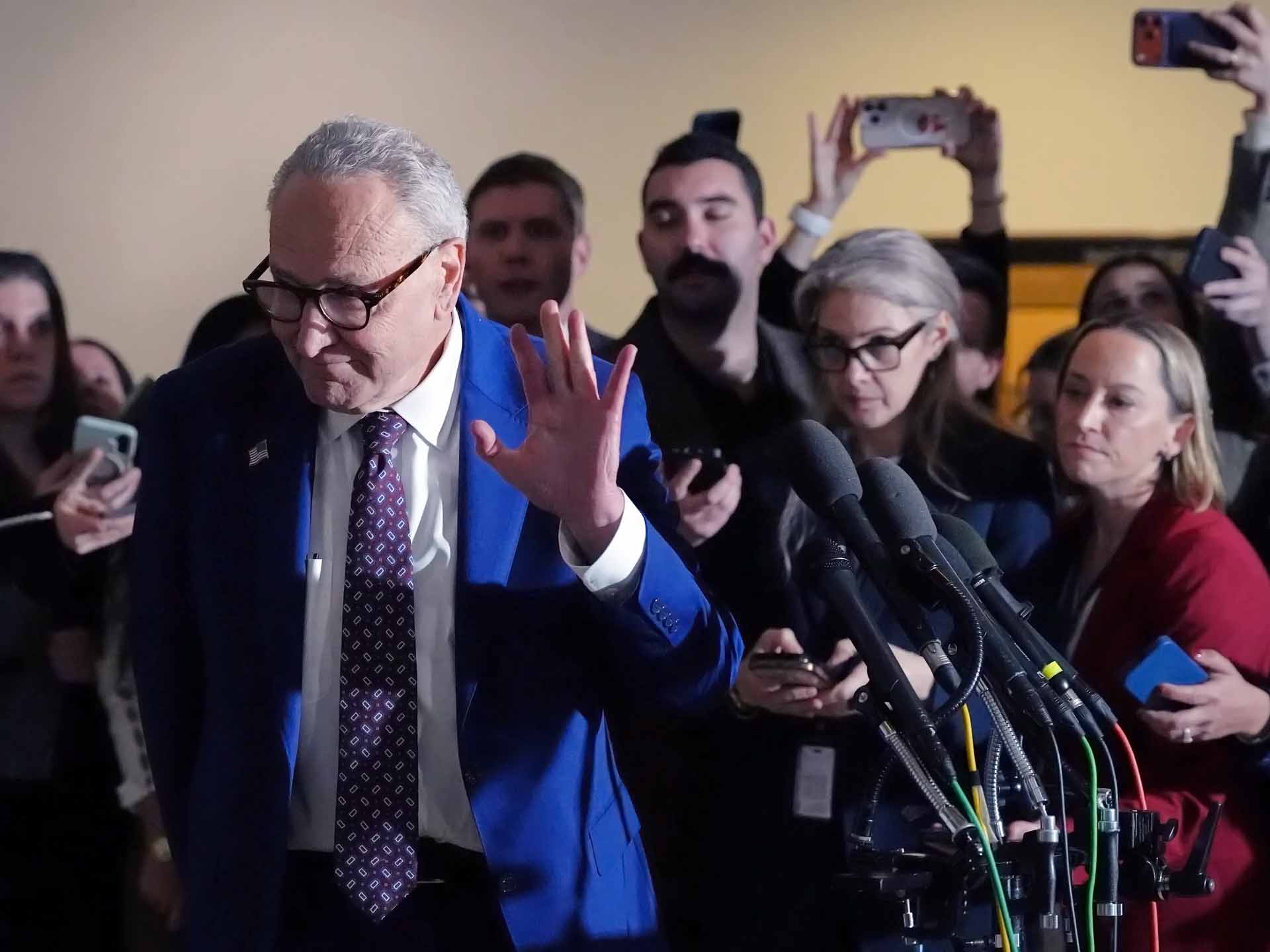
Recently, the U.S. military abducted Venezuelan leader Nicolas Maduro. This has led Senate Democrats to pledge to introduce a resolution to limit President Donald Trump’s military actions. Chuck Schumer, the Senate’s top Democrat, said they will push for a vote within the week, though it may not succeed.
Since Trump began his second term in 2025, Congress has considered several bills to require him to get approval before launching military strikes. The recent attack on Venezuela shows a clear example of presidential overreach, which experts believe needs Congress to take action. David Janovsky, acting director of the Constitution Project at the Project on Government Oversight, emphasizes this point.
Janovsky notes that under the U.S. Constitution, only Congress has the power to approve military action. He also points out that the attack on Venezuela goes against the UN Charter, which is considered law in the United States.
He added, “Past justifications for unilateral military action by presidents simply do not apply here. This is particularly bold.”
The Struggle Ahead
Since August, the Trump administration has planned to increase its efforts against Venezuela.
In August, Trump reportedly signed a secret memo asking the U.S. military to prepare for action against criminal networks abroad. Then, on September 2, the administration began launching strikes on boats suspected of drug smuggling off the coasts of Venezuela and Colombia.
Many condemned this bombing campaign as a violation of international law and as undermining Congress’s power. It happened alongside an increase in U.S. military presence near Venezuela.
Trump also suggested that the military campaign could soon target drug trafficking in Venezuela itself. “When they come by land, we’re going to stop them the same way we stopped the boats,” Trump said on September 16.
These strikes led to two votes in the House of Representatives in December. One vote would require Congress to approve any land strikes on Venezuela, while the other would force Trump to seek approval for strikes on drug-smuggling boats.
Both resolutions failed to pass, mostly along party lines. A similar resolution in the Senate, which aimed to require Congress’s approval for more attacks, also did not pass in November.
After the recent U.S. operation on Saturday, Senator Tim Kaine spoke to reporters. He hoped that Trump’s bold actions in Venezuela would encourage lawmakers to take action.
Kaine said Republicans can no longer treat Trump’s military buildup in the Caribbean and his threats as simple “bluffs” or “negotiating tactics.”
“It’s time for Congress to get serious and do its job,” Kaine stated.
In an interview with CNN’s Dana Bash, US Senator Chris Murphy agreed that Congress has become weak on war matters. This issue has been seen in both Democratic and Republican administrations.
Bash pointed out that former President Barack Obama’s 2011 military action in Libya occurred without Congress’s approval.
Republicans Are Indifferent About Resolutions
Under the U.S. Constitution, Congress has the sole power to declare war, which it has not done since World War II.
Instead, lawmakers have often used Authorizations for Use of Military Force (AUMFs) to approve sending troops to recent wars, such as those in Iraq and Afghanistan and for strikes against alleged al-Qaeda members in the Middle East, Africa, and Asia.
So far, no AUMFs have been passed for military action in Venezuela.
If lawmakers think the president is acting beyond their legal power, they can pass a war powers resolution. This resolution requires Congress to approve any further military actions.
These resolutions are mostly symbolic, but they give a legal basis to challenge the president’s actions in court. However, they are hard to pass since two-thirds of both chambers of Congress must agree to override a presidential veto.
With the current Congress, passing a war powers resolution would likely need support from both parties.
Republicans have narrow majorities in the House and Senate, so some members of Trump’s party would need to support the resolution for it to pass.
In November’s Senate vote, only two Republicans, Rand Paul from Kentucky and Lisa Murkowski from Alaska, voted in favor. The resolution failed with a vote of 51 to 49.
In December, a similar vote in the House only received 211 votes in favor and 213 against. In that vote, three Republicans supported the resolution while one Democrat opposed it.
Leave a Reply