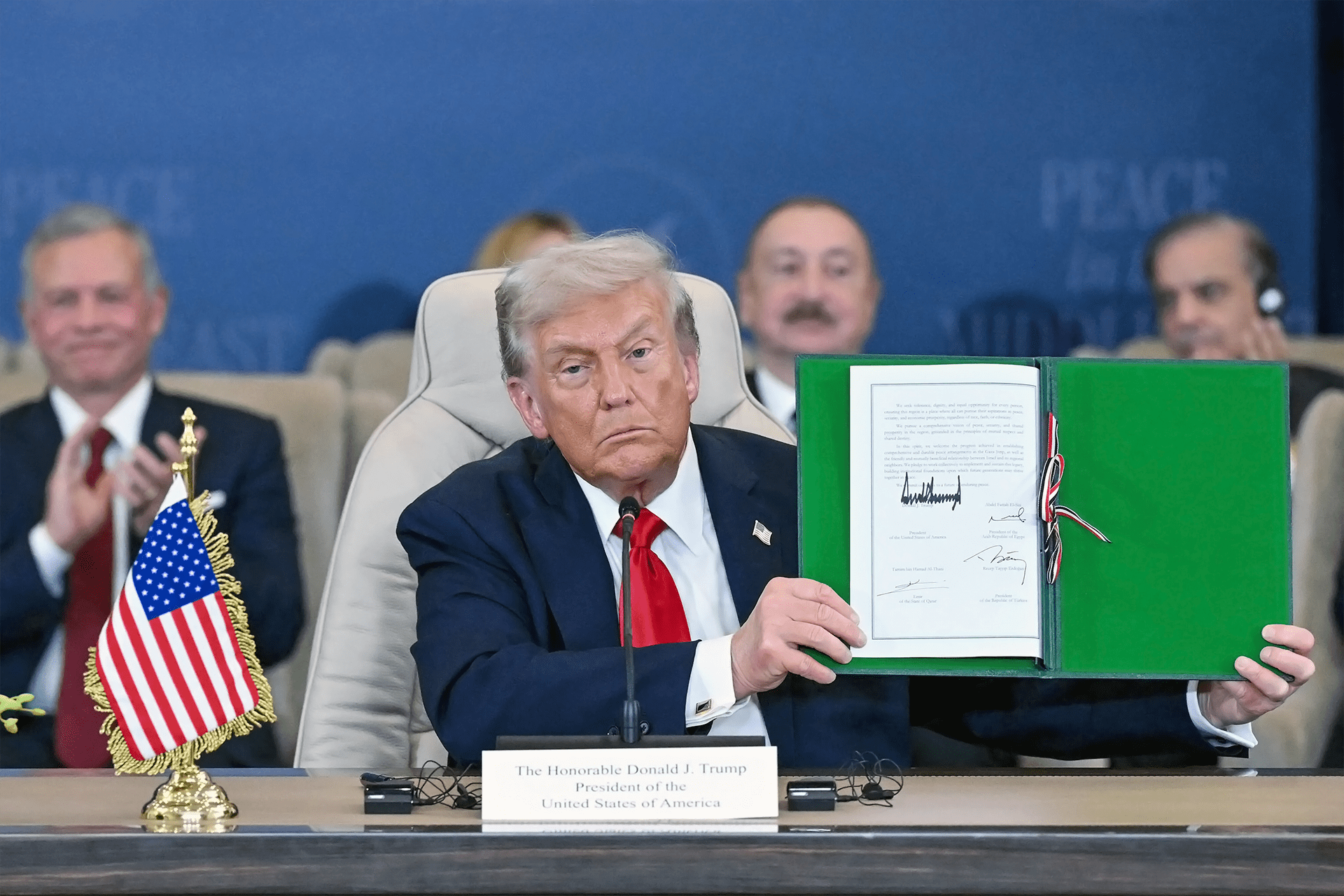
The White House wants to move forward with the Gaza ceasefire process in January. However, Israeli Prime Minister Benjamin Netanyahu has resisted this plan, leading to tension with U.S. President Donald Trump’s team, according to Israeli media.
According to Israel’s Channel 12, the U.S. aims to announce a new Palestinian technocratic government to manage daily affairs in Gaza in early January. This government is a key part of the second phase of the plan to end the conflict.
The White House also plans to set up a multinational peace council to oversee the technocratic government and an international force to maintain security in Gaza next month.
Trump may announce the peace council, which he has mentioned he would lead, during the Davos Economic Forum on January 19.
Additionally, the U.S. envisions starting a staged disarmament of Hamas and other Palestinian armed groups, managed by the new technocratic government, according to a senior White House official.
Demilitarization of Hamas is a major part of the ceasefire plan approved by the United Nations Security Council in November. However, Hamas has not fully committed to this. Recently, Hamas leader Khaled Meshaal stated that the group would consider a temporary “freeze” on its weapons but would not agree to complete disarmament.
Netanyahu Government Making It Tough
Trump’s envoy, Steve Witkoff, recently informed Israeli officials about U.S. plans to move forward with the ceasefire process and create a new peace council, according to a senior Israeli official reported by Israel’s Channel 13.
However, Prime Minister Netanyahu is skeptical about these plans, particularly regarding the proposed disarmament of Hamas, as another source told Israel’s Channel 12.
This discussion comes after Israel has repeatedly violated the October ceasefire, putting its future at risk. During the 11-week truce, Israel has attacked Gaza nearly every day, killing at least 406 Palestinians, including many civilians, according to the Palestinian Ministry of Health.
Israel has also blocked the full delivery of promised aid and continues to restrict important food items like meat, dairy, and vegetables.
On Tuesday, Israeli Defense Minister Israel Katz stated that Israeli forces “will never leave Gaza,” even though the ceasefire plan calls for a complete withdrawal.
The U.S. is frustrated by what it sees as Israel’s lack of respect for the truce and the tactics that delay progress in the peace process, as reported by Israel’s Channel 12.
An anonymous U.S. official said, “It feels like the Israelis are having second thoughts about the Gaza agreement. Implementation is already difficult, but sometimes the Israelis make it even harder.”
Daniel Levy, a former Israeli government adviser who leads the U.S./Middle East Project, said that Israel likely will not meet key ceasefire terms, such as fully withdrawing and allowing a technocratic Palestinian government in Gaza, unless it faces significant outside pressure.
“Israel has no intention of withdrawing from Gaza. It does not want an international force that could limit its ability to act against Palestinians,” Levy said. “It also doesn’t intend to allow legitimate Palestinian governance in Gaza. Unless it is pushed to accept these factors, Israel will continue to resist.”
Leave a Reply