Blog

  • Ukraine Denies Involvement in Drone Attack on Putin’s Residence

    Ukraine Denies Involvement in Drone Attack on Putin’s Residence

    President Volodymyr Zelensky has denied Russia’s claims that Ukraine attacked one of President Vladimir Putin’s residences with drones. He accused Moscow of trying to disrupt peace talks.

    Russia’s Foreign Minister, Sergei Lavrov, said Ukraine used 91 long-range drones on Sunday night to target Putin’s residence in the Novgorod region of Russia.

    Following the alleged attack, Russia announced it would review its stance in peace negotiations. It is not clear where Putin was during this time.

    Zelensky called the claims “typical Russian lies” and suggested they serve as an excuse for Russia to continue its attacks on Ukraine. He pointed out that Russia has previously targeted government buildings in Kyiv and warned that this latest accusation could lead to more strikes on Ukraine.

    “Everyone needs to stay alert right now. A strike could happen in the capital,” Zelensky told reporters on Monday. He described Russia’s comments as a “threat.”

    He also said Russia is “looking for reasons” to keep attacking Ukraine and sees any progress toward a ceasefire as a “failure.”

    Zelensky emphasized on X: “The world must not stay silent now. We cannot let Russia undermine efforts to achieve lasting peace.”

    Russia to Change Its Negotiating Position

    On Monday, Russian Foreign Minister Sergey Lavrov said that Russian air defense systems intercepted and destroyed all 91 drones that were launched at President Putin’s residence. He also mentioned that there were no injuries or damage from the attack.

    Lavrov stated, “Because of the complete deterioration of the Ukrainian government, which has turned to state terrorism, Russia will revise its negotiating position.” However, he noted that Russia does not plan to stop negotiating with the United States, according to the Russian news agency Tass.

    On Tuesday, the Kremlin said it would not provide proof of the alleged attack. A spokesman told reporters that Russia would now take a tougher negotiating stance.

    Ukraine’s Foreign Minister Andrii Sybiha urged other countries to ignore Russia’s “false claims.” He said, “Almost a day has passed, and Russia still hasn’t provided any credible evidence for its accusations about Ukraine’s supposed ‘attack on Putin’s residence.’ They won’t, because there is none. No such attack happened.”

    Moscow’s claims followed talks between the U.S. and Ukraine in Florida on Sunday, where Presidents Trump and Zelensky discussed a new peace plan to end the war. After the meeting, Zelensky told Fox News on Monday that there was a “chance to end this war” by 2026. He emphasized that Ukraine cannot win the war without U.S. support.

    “My view of President Trump’s sanctions and economic measures shows that he’s ready to take strong actions,” Zelensky said. “In this situation, the United States can help us achieve peace more quickly.”

    I Don’t Trust Putin – Zelensky

    The president of Ukraine, Volodymyr Zelensky, told Fox News that he does not trust Putin. He believes that Putin does not want Ukraine to succeed. Zelensky mentioned that the US provided Ukraine with security promises for 15 years, and Trump said they were close to finalizing this agreement.

    Zelensky pointed out that the main issues left to resolve are territorial concerns and the Russian-occupied Zaporizhzhia nuclear plant. There has been little progress regarding the Donbas region, which Russia wants to take completely. Currently, Russia controls about 75% of the Donetsk region and nearly 99% of the Luhansk region. Together, these regions are called Donbas. Russia has rejected important parts of the ongoing plan.

    On Monday, the White House reported that President Trump had a “positive call” with Putin after the US-Ukraine talks.

    Yuri Ushakov, a Kremlin foreign policy advisor, shared that during the call, Putin mentioned an alleged attack on his residence occurred soon after what the US considered a successful round of talks. Ushakov said, “The US president was shocked and angry about this information. He couldn’t believe such reckless actions. This will certainly affect how the US works with Zelensky.”

  • Iran Warns of ‘Severe’ Response after Trump’s New Strikes Threat

    Iran Warns of ‘Severe’ Response after Trump’s New Strikes Threat

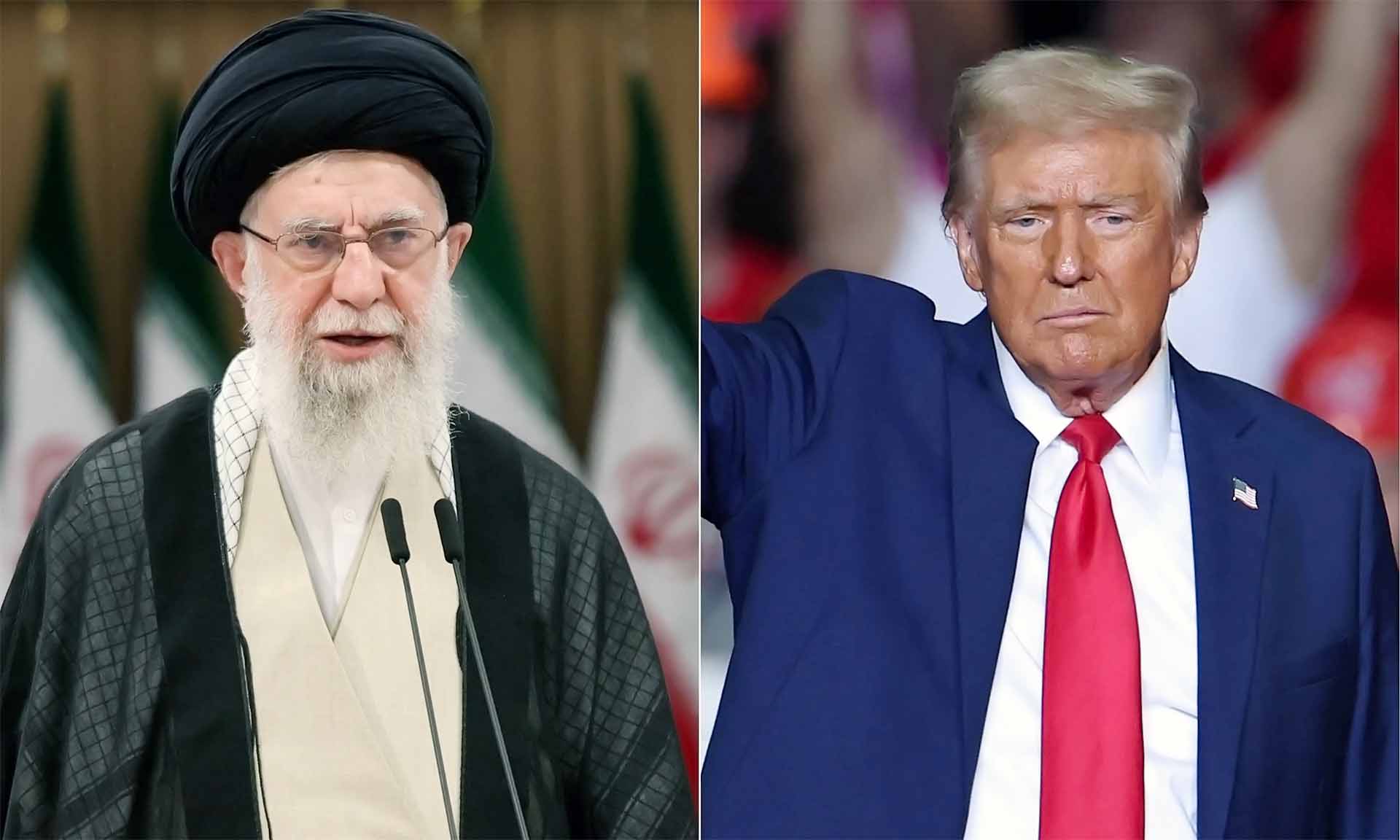
    Iran has promised to respond strongly to any attacks after U.S. President Donald Trump threatened more military action if Tehran tries to rebuild its nuclear program or missile capabilities.

    President Masoud Pezeshkian made this warning on X on Tuesday, one day after Trump met with Prime Minister Benjamin Netanyahu at his Florida estate. During this meeting, Trump strongly supported Israel’s position in the region.

    The U.S. had not previously said it would target Iran’s missile capabilities, which is an important goal for Israel. Instead, the focus has been on Iran’s nuclear program. Iran insists that its nuclear activities are for peaceful purposes. U.S. intelligence and the U.N. nuclear watchdog have not found any evidence of nuclear weapons production before the attacks by the U.S. and Israel in June.

    Iran has refused to negotiate about its missile program. These comments from both leaders raise concerns about a new conflict, just months after a 12-day war in June that killed over 1,100 Iranians and 28 Israelis.

    Pezeshkian said that any aggression would lead to a “severe and regret-inducing” response from Iran. His statement came shortly after Trump told reporters at Mar-a-Lago that the U.S. could carry out another major attack on Iran.

    “Now I hear that Iran is trying to build up again, and if they are, we’re going to have to knock them down,” Trump said while standing next to Netanyahu. “We’ll knock the hell out of them.”

    Trump also stated that he would support immediate strikes on Iran’s nuclear program and missile facilities if Tehran continues developing long-range weapons.

    Iran is Rebuilding Its Ballistic Missile Stockpile, Israeli Forces Say

    Israeli officials are worried that Iran is rebuilding its stockpile of ballistic missiles after significant losses during the June conflict.

    One Israeli official told Ynet that if the U.S. does not reach an agreement with Iran to stop its ballistic missile program, a confrontation with Tehran might be necessary.

    Pezeshkian described the situation as a “full-scale war” involving the U.S., Israel, and Europe. He said this conflict is “more complicated and more difficult” than Iran’s war with Iraq in the 1980s, which killed over one million people.

    In June, Israel carried out nearly 360 strikes across 27 Iranian provinces in 12 days, according to the conflict monitoring group ACLED. The attacks focused on military bases, nuclear plants, and government buildings. They destroyed many Iranian missiles and killed several important military leaders and scientists.

    In response, Iran fired over 500 missiles at Israel, with some landing in towns. While Trump claimed that the strikes “completely obliterated” Iran’s nuclear capabilities, experts disagreed, saying Iran may still have hidden stockpiles of enriched uranium and could restart production within months.

    Despite the damage, Iranian officials say they are now better prepared. Pezeshkian recently stated that Iran’s military forces are “stronger in terms of equipment and manpower” than they were before the ceasefire.

    The war did not lead to the internal unrest that Netanyahu expected. There were no significant protests, and daily life in Tehran continued normally despite the attacks.

  • Moscow May Benefit More Than Lose from US Intervention in Venezuela

    Moscow May Benefit More Than Lose from US Intervention in Venezuela

    President Donald Trump’s growing threats to Venezuela may seem random, but they are part of larger global conflicts. This situation is not just a regional issue; it has broader implications.

    Venezuela is becoming a bargaining chip in the struggle between major world powers, similar to Ukraine.

    In his history of World War II, Antony Beevor shows how different conflicts around the globe, like the Nanjing massacre in China, Mussolini’s invasion of Abyssinia, and the Spanish Civil War, contributed to the start of the war.

    This does not mean we are heading toward a third world war, but the risk is always present. As long as Trump and Russian President Vladimir Putin focus more on making deals than on fighting, it is more likely that they will reach an agreement than that a global war will occur.

    Venezuela may not be a superpower, but it is important globally. It has the largest proven oil reserves in the world and is a political ally of China, Iran, and Russia, all countries that the US sees as rivals. Among these, Russia has the most complicated relationship with Venezuela. The US’s actions carry risks for Russia, but there may also be benefits.

    A significant factor in this situation is the surprising improvement in US-Russia relations during Trump’s second term.

    The War is Ending on His Terms

    Since Vladimir Putin became president in 2000, the Kremlin has seen the United States as an unreliable partner and later as an enemy, believing the US aims to divide and control countries in the former Soviet Union.

    Things changed when Donald Trump returned to the White House in early 2025. The US largely stopped its financial aid to Ukraine and took a neutral stance, although it still provides important intelligence to the Ukrainian military. In its latest National Security Strategy, the US even removed Russia from the list of “direct threats.”

    As peace talks regarding Ukraine, started by Trump, slowly move forward, Putin may think that the war will end on terms favorable to him. Despite showing defiance, Ukrainian President Volodymyr Zelenskyy recently indicated he might agree to withdraw Ukrainian forces from northern Donbas, which is one of Russia’s main demands in the negotiations. This is just one of several concessions he has mentioned he might consider in 2025, while the Kremlin stays firm in its position.

    At the same time, European Union countries have struggled to agree on a reparations loan that could provide steady funding for Ukraine in the future. A last-minute, cheaper alternative was suggested, but this situation shows the limits of Europe’s support for Ukraine.

    Given these factors, it is not a good time for the Kremlin to risk its complicated but generally beneficial relationship with Trump’s administration over an issue as unrelated to Russia’s main interests as Venezuela.

    Russia may make the expected public statements. Vassily Nebenzia, Russia’s envoy to the United Nations, accused the US of “aggressive neocolonialism” by pressuring Venezuela. He claimed the US is “cynically imposing its order” to maintain global control and exploit other countries’ resources without consequences.

    This refers to the US’s demands for Venezuela to allow American oil companies back in, which used to control much of the country’s oil industry before it was gradually nationalized in the 1970s.

    Military Attack on Venezuela Potentially Exceeds the Losses

    The potential fall of Nicolas Maduro’s government is unlikely to be a disaster for Russia. Russia has shown it can adapt to new governments that replace its traditional allies in countries affected by U.S. regime change, as seen in Iraq and Syria.

    There are also political calculations to consider. A U.S. military attack on Venezuela might have more benefits than drawbacks for Russia. Such an attack would put Russia and the U.S. on equal moral ground regarding the war in Ukraine. If the U.S. can use military force in what it calls “its backyard,” why can’t Russia do the same within its own sphere? U.S. actions in Venezuela could justify Russian actions in Ukraine for many, especially in the Global South. This would further divide the U.S. from Europe and increase polarization within the U.S. itself.

    If the Trump administration also pursues its goal of occupying Greenland along with actions in Venezuela, the situation could become even better for Russia. This could create opportunities for better relations with the EU part of Europe, which is currently Russia’s main global rival.

    Overall, Russians see themselves as defenders of the old order. They believe the U.S.-led West is trying to change the established post-World War II order, and they view the war in Ukraine as a way to push back against these changes.

  • US Cuts UN Humanitarian Aid To $2bn Amid Trump Demands for Reforms

    US Cuts UN Humanitarian Aid To $2bn Amid Trump Demands for Reforms

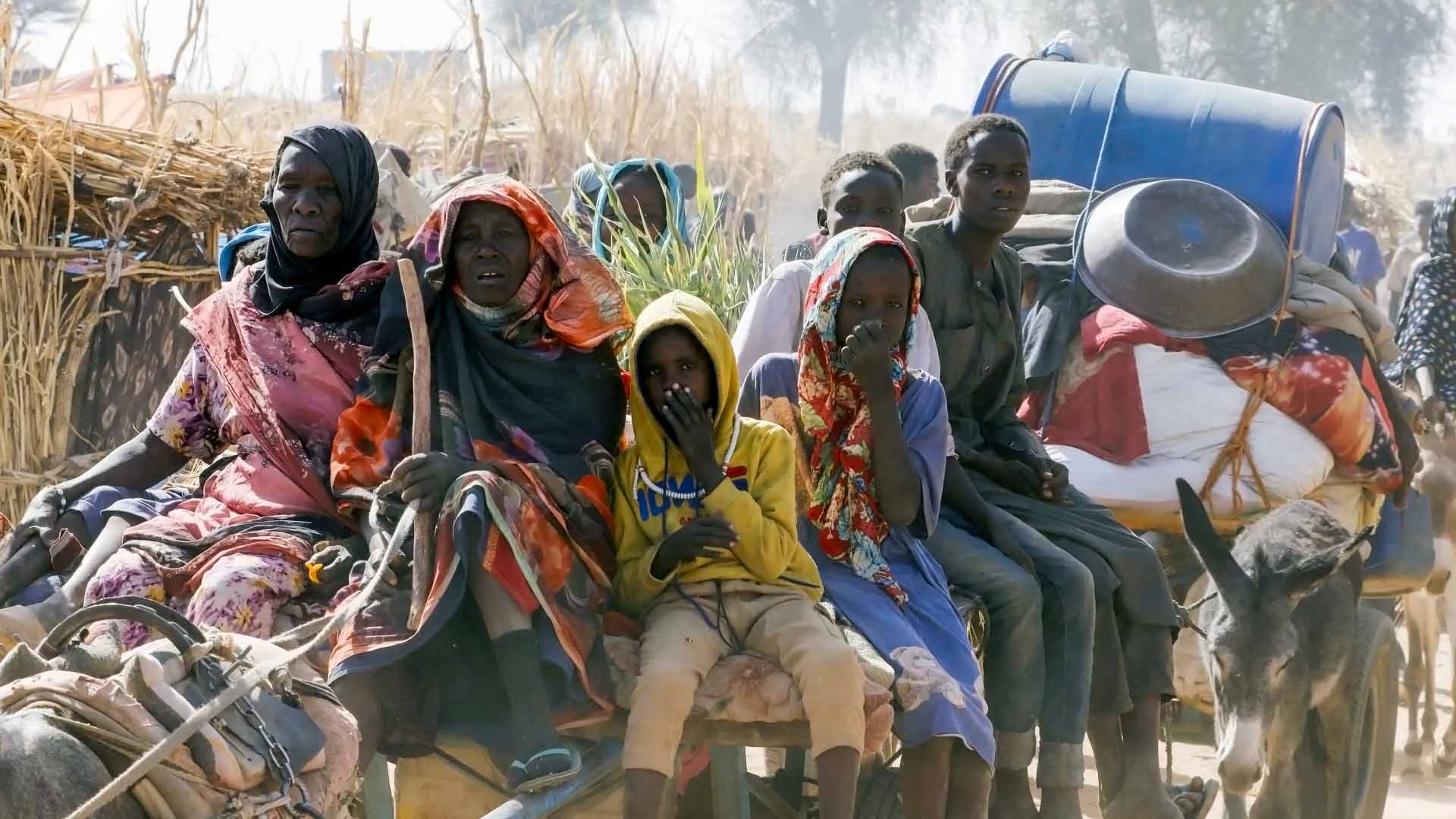
    The United States will contribute only $2 billion in humanitarian aid to the United Nations. This is a small amount compared to what the U.S. usually provides. The Trump administration is cutting back on foreign aid significantly.

    This new commitment, announced on Monday, is much lower than the up to $17 billion the U.S. has given in recent years as the UN’s main supporter. About $8 to $10 billion of that was voluntary funding, according to U.S. officials.

    Critics have strongly criticized these cuts, stating they lead to more deaths and hunger as millions of people around the world lose access to food, shelter, and basic aid.

    The $2 billion will be used for specific countries or crises, with 17 countries targeted at first. These include Bangladesh, the Democratic Republic of the Congo, Haiti, Syria, and Ukraine.

    Afghanistan and Palestine are not on this list. Officials say that aid for Palestine will come from funding related to Trump’s upcoming Gaza plan.

    Negative Consequences as Western Countries Reduce Aid

    Earlier this month, the United Nations (UN) asked for $23 billion in funding for 2026, but this is only half of what it needs. Western countries have cut their aid, which has led to these funding shortages.

    In June, the UN warned it would need to reduce its programs significantly because of the largest funding cuts ever in international aid.

    The Trump administration has weakened the main U.S. agency that provides foreign aid, the U.S. Agency for International Development (USAID). They have told UN agencies to “adapt, shrink, or die” in response to these changes.

    Other Western countries, including Germany, have also decreased their funding. The effects of these cuts are being felt quickly in the Middle East, South Asia, and Africa.

    In July, the UN High Commissioner for Refugees (UNHCR) said over 11 million refugees would lose access to aid. At that time, the agency had received only 23% of its $10.6 billion budget and expected its total budget to drop to $3.5 billion by the end of the year, which is not enough to help 122 million people.

    Basic services for Rohingya refugees in Bangladesh are in danger of collapsing, and education for more than 230,000 Rohingya children is likely to stop.

    The UN also predicted a rise in deaths from HIV/AIDS by 2029 due to the funding cuts. Additionally, the charity Doctors Without Borders reported that over 650 children have died from malnutrition in Nigeria because of the lack of international aid.

    Regulate the Spigot

    A senior U.S. official, speaking anonymously, told The Associated Press that the U.S. will provide $2 billion as part of a larger plan. In this plan, the UN humanitarian agency (OCHA) will manage the distribution of funds.

    The Trump administration wants UN agencies to have stronger leadership and authority, according to the official.

    OCHA chief Tom Fletcher has previously criticized the lack of international response to rising humanitarian needs, saying his agency is under pressure.

    Despite this, Fletcher praised the $2 billion agreement, stating that the U.S. is showing it can be a leader in humanitarian efforts.

  • US Launched Strikes on Islamic State in Nigeria

    US Launched Strikes on Islamic State in Nigeria

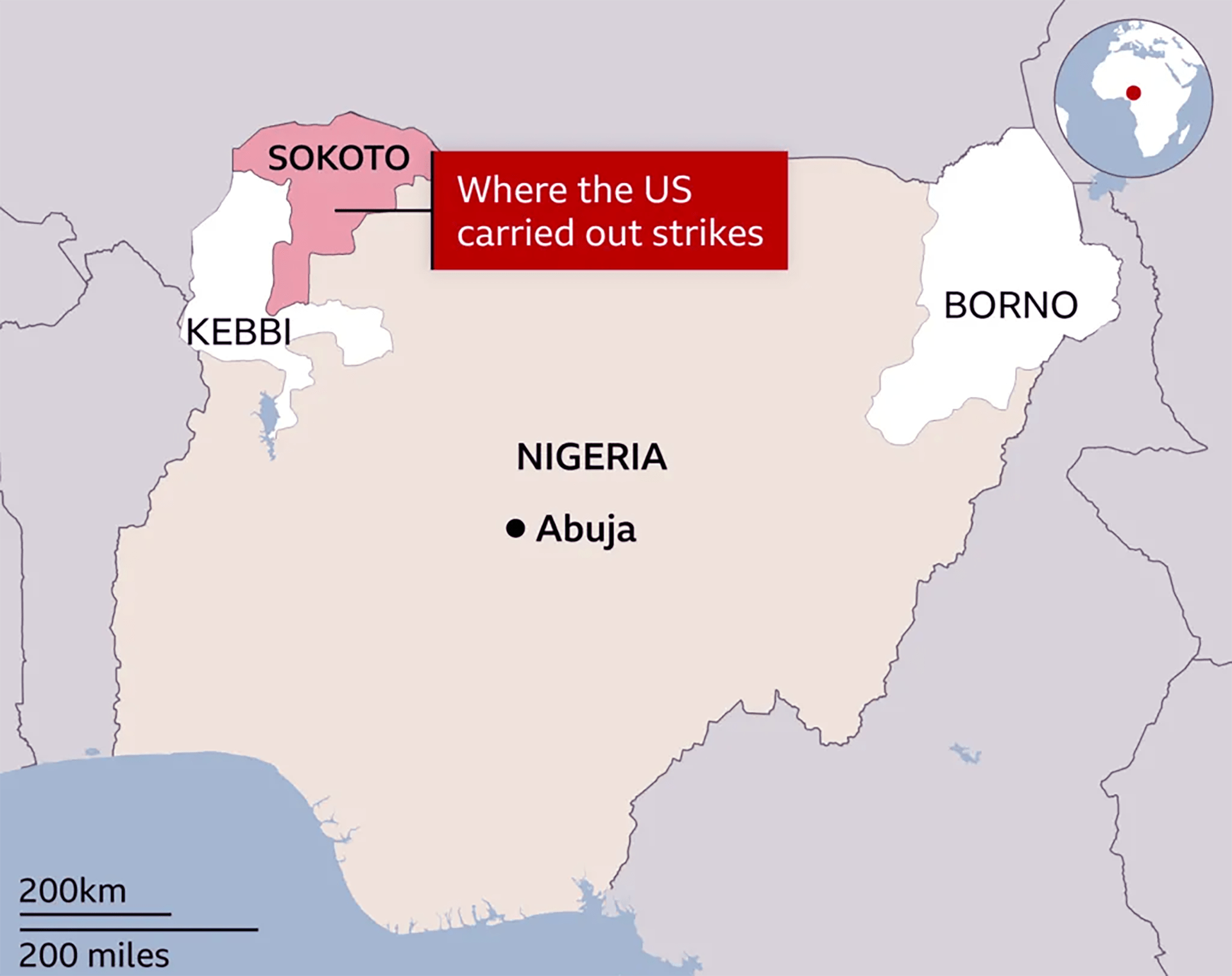
    The United States has carried out airstrikes against a group of fighters linked to the Islamic State in northwestern Nigeria. These fighters have been trying to take control of the area.

    The U.S. military attacked camps in Sokoto State, near the border with Niger. They found that several people may have been killed in the strikes.

    President Donald Trump called the strikes strong and said the fighters were dangerous people who target innocent Christians.

    Nigerian Foreign Minister Yusuf Maitama Tuggar said this was a joint operation and it wasn’t about any one religion.

    He also mentioned that they had planned the strikes for a long time and used information from Nigeria. More strikes could happen in the future.

    Tuggar explained that the timing of the attacks wasn’t because of Christmas; it was about stopping terrorists who harm Nigerians.

    For years, the Nigerian government has been fighting different groups that cause violence, especially in the northeast part of the country, which is far from Sokoto State.

    U.S. Attacked Late Thursday Night

    Eyewitness Umar Jabo told BBC News that the attack happened late Thursday night near the village of Jabo. He explained, “Everyone thought it was a plane. It crashed in the fields.”

    His statement was supported by images on social media, showing local people filming the burning aftermath in a field.

    Umar Jabo also said that no ISIS fighters were killed, adding, “Here in Jabo, we live peacefully, and there is no conflict between Christians and us.”

    The Trump administration has accused the Nigerian government of not protecting Christians from attacks by jihadists, claiming that a “genocide” is happening.

    Trump has called Nigeria a “country of particular concern.” This label, used by the U.S. State Department, allows for sanctions against countries that violate religious freedom severely.

    In November, the U.S. military was ordered to prepare for potential intervention in Nigeria.

    During that time, an adviser to Nigerian President Bola Tinubu stated in an interview with BBC News that militants were targeting individuals from various faiths. The adviser emphasized that any military action taken by the U.S. should be conducted jointly with Nigerian forces.

    No Evidence that Christians are Being Killed More Than Muslims

    Groups that monitor violence in Nigeria report there is no proof that Christians are being killed more than Muslims. The country has roughly equal numbers of both religions.

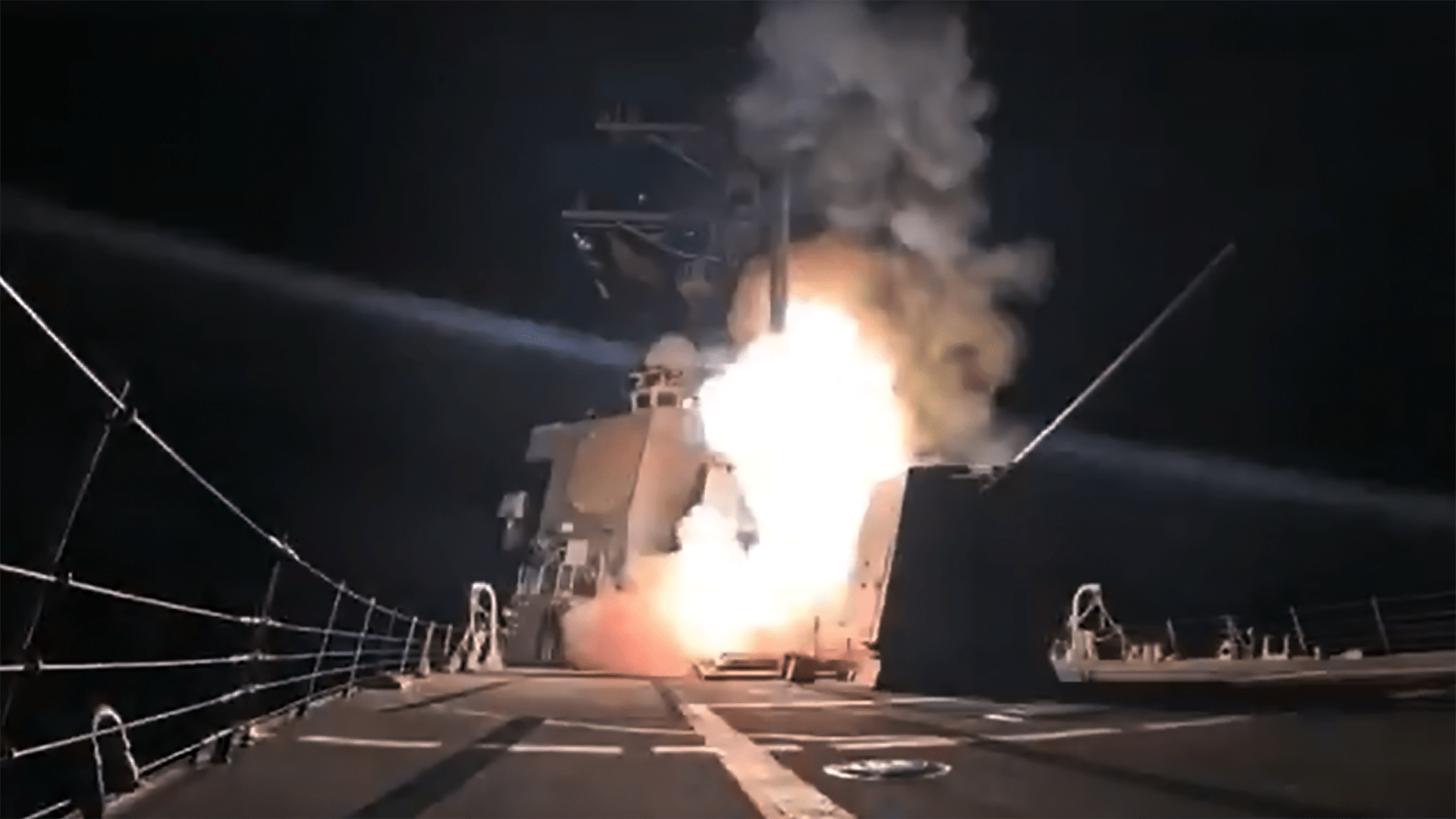
    On Christmas Day, Trump announced airstrikes, saying he would “not allow Radical Islamic Terrorism to prosper.”

    U.S. Defense Secretary Pete Hegseth thanked the Nigerian government for its support. He also wished everyone a “Merry Christmas!” in a post on X.

    The U.S. Department of Defense shared a video showing a missile being launched from a ship.


    US Launched Strikes on Islamic State in Nigeria


    On Friday morning, the Nigerian foreign ministry said the country is working closely with international partners, including the United States, to fight terrorism and violence.

    This cooperation has led to successful strikes against terrorist targets in the Northwest.

    Jihadist groups, like Boko Haram and their IS-connected branches, have caused trouble in northeastern Nigeria for over a decade, killing thousands of people. Reports from Acled show that most victims are Muslims.

    Bulama Bukati, a Nigerian human rights lawyer and conflict analyst, thinks Thursday’s strikes hit a new IS-aligned group that came from the Sahel region and moved to Nigeria.

    Bukati explained that the largest IS-linked group in Nigeria, the Islamic State West Africa Province, operates in the northeast. The smaller group, called Lakurawa, wants to establish a base in Sokoto state in the Northwest.

    “They started entering Nigeria in 2018, but in the last 18 months to two years, they have set up camps in Sokoto and Kebbi states,” he said. “They have been attacking people and imposing their rules in Sokoto state during this time.”

    Local official Bashar Isah Jabo said there are no IS or Lakurawa members in the village. He added that the missile landed less than 500 meters (1,600 feet) from a local hospital.

    Daily U.S. Reconnaissance Flights in Sokoto

    A pro-ISIS social media channel reports that U.S. reconnaissance flights are occurring almost daily in Sokoto and in Borno, the northeastern state where Nigeria’s largest ISIS-linked group operates.

    In central Nigeria, clashes occur frequently between mostly Muslim herders and farming groups, who are often Christian, over water and pasture access. Conflicts like these create ongoing violence, leading to many deaths. Both sides commit brutal acts.

    Recently, the U.S. military has launched two major operations against ISIS. Last week, it carried out a large strike on ISIS in Syria. U.S. Central Command (Centcom) said that fighter jets, attack helicopters, and artillery attacked over 70 targets in multiple locations across central Syria, with aircraft from Jordan also participating in the operation. These strikes were in retaliation for the deaths of three Americans, two soldiers and a civilian interpreter, who were killed in an ambush by the group.

  • Trump Expected to Reveal a Proposal for a “Peace Council” – Israeli Media

    Trump Expected to Reveal a Proposal for a “Peace Council” – Israeli Media

    The White House wants to move forward with the Gaza ceasefire process in January. However, Israeli Prime Minister Benjamin Netanyahu has resisted this plan, leading to tension with U.S. President Donald Trump’s team, according to Israeli media.

    According to Israel’s Channel 12, the U.S. aims to announce a new Palestinian technocratic government to manage daily affairs in Gaza in early January. This government is a key part of the second phase of the plan to end the conflict.

    The White House also plans to set up a multinational peace council to oversee the technocratic government and an international force to maintain security in Gaza next month.

    Trump may announce the peace council, which he has mentioned he would lead, during the Davos Economic Forum on January 19.

    Additionally, the U.S. envisions starting a staged disarmament of Hamas and other Palestinian armed groups, managed by the new technocratic government, according to a senior White House official.

    Demilitarization of Hamas is a major part of the ceasefire plan approved by the United Nations Security Council in November. However, Hamas has not fully committed to this. Recently, Hamas leader Khaled Meshaal stated that the group would consider a temporary “freeze” on its weapons but would not agree to complete disarmament.

    Netanyahu Government Making It Tough

    Trump’s envoy, Steve Witkoff, recently informed Israeli officials about U.S. plans to move forward with the ceasefire process and create a new peace council, according to a senior Israeli official reported by Israel’s Channel 13.

    However, Prime Minister Netanyahu is skeptical about these plans, particularly regarding the proposed disarmament of Hamas, as another source told Israel’s Channel 12.

    This discussion comes after Israel has repeatedly violated the October ceasefire, putting its future at risk. During the 11-week truce, Israel has attacked Gaza nearly every day, killing at least 406 Palestinians, including many civilians, according to the Palestinian Ministry of Health.

    Israel has also blocked the full delivery of promised aid and continues to restrict important food items like meat, dairy, and vegetables.

    On Tuesday, Israeli Defense Minister Israel Katz stated that Israeli forces “will never leave Gaza,” even though the ceasefire plan calls for a complete withdrawal.

    The U.S. is frustrated by what it sees as Israel’s lack of respect for the truce and the tactics that delay progress in the peace process, as reported by Israel’s Channel 12.

    An anonymous U.S. official said, “It feels like the Israelis are having second thoughts about the Gaza agreement. Implementation is already difficult, but sometimes the Israelis make it even harder.”

    Daniel Levy, a former Israeli government adviser who leads the U.S./Middle East Project, said that Israel likely will not meet key ceasefire terms, such as fully withdrawing and allowing a technocratic Palestinian government in Gaza, unless it faces significant outside pressure.

    “Israel has no intention of withdrawing from Gaza. It does not want an international force that could limit its ability to act against Palestinians,” Levy said. “It also doesn’t intend to allow legitimate Palestinian governance in Gaza. Unless it is pushed to accept these factors, Israel will continue to resist.”

  • US Gov. to Resume Wage Garnishment for Student Loan Defaulters

    US Gov. to Resume Wage Garnishment for Student Loan Defaulters

    The Trump administration plans to start garnishing wages for some borrowers who have not paid back their student loans. This is the first time the federal government has taken this action since the COVID-19 pandemic began.

    Starting January 7, affected borrowers will receive notices from the Department of Education.

    Initially, the policy will impact about 1,000 borrowers, with more borrowers expected to be affected over time. The spokesperson said, “The notices will increase in number each month.”

    When Al Jazeera asked how they chose the borrowers for this first round of garnishments and how many more might be affected, the agency did not provide details. However, they noted that collections only happen after borrowers have received enough notice and an opportunity to repay their loans.

    Under federal law, the government can take up to 15 percent of a borrower’s take-home pay if the borrower still has at least 30 times the federal minimum wage per week. The current federal minimum wage is $7.25 an hour, a rate that has not changed since July 2009.

    About one in six American adults has student loan debt, which totals around $1.6 trillion. As of April, more than 5 million borrowers had not made a payment in over a year, according to the Education Department.

    Economic Pressure Mounts for Many Americans

    The government plans to start garnishing wages as many Americans face economic pressure from rising prices and a slower job market. In 2025, more than 1.1 million people lost their jobs because there weren’t many new jobs available. In October, some jobs were lost, but in November, a few jobs were added.

    By the end of these months, the unemployment rate went up to 4.6 percent, which was the highest it had been since 2021.

    Julie Margetta Morgan, a former deputy undersecretary at the Education Department under President Joe Biden, told Al Jazeera, “Families are forced to choose between paying bills and putting food on the table. The Trump administration’s decision to start garnishing wages takes away even that small choice from borrowers who are struggling.”

    Morgan added, “Instead of fixing the affordability crisis that prevents Americans from paying their student loans, the government is punishing families and making them give up basic needs.”

    In addition to wages, the federal government can also take money from tax refunds, Social Security benefits, and certain disability payments.

  • UN Experts Called US Naval Barricade of Venezuela an Illegal Aggression

    UN Experts Called US Naval Barricade of Venezuela an Illegal Aggression

    Four United Nations experts say the United States is doing something wrong by blockading Venezuela with its Navy. They call it illegal and want Congress to do something about it.

    The experts said you can’t use force to make other countries follow your rules. The US has sent a large military presence to the Caribbean and is stopping oil tankers that it believes are violating sanctions against Venezuela.

    The experts highlighted that a blockade is a prohibited use of military force against another country under the UN Charter. They added that this use of force is recognized as illegal aggression. The experts warned that this illegal force and threats to use more force put lives at risk in Venezuela and the surrounding region.

    US President Donald Trump claims Venezuela uses its oil, the country’s main resource, to support “narcoterrorism, human trafficking, murders, and kidnappings.”

    Venezuela denies these drug trafficking claims. The U.S. government wants to get rid of President Nicolás Maduro to take over Venezuela’s oil.

    Since September, the U.S. has attacked boats it says were smuggling drugs. They haven’t shown proof of this. More than 100 people have died because of these attacks.

    US Congress Should Intervene

    “The recent killings are wrong and break the right to life. These events should be looked into, and the people responsible should be punished,” the experts said.

    “They also want the US Congress to help stop more attacks and lift the blockade,” they added. They asked countries to work together to stop the blockade and the wrong actions and to make sure that those who did bad things are punished.

    The message was signed by four experts: Ben Saul, who protects human rights; George Katrougalos, who wants fairness in the world; Surya Deva, who knows about development; and Gina Romero, who supports the right to gather peacefully.

  • Trump Recalls Many Career Diplomats Amidst an ‘America First’ Initiative

    Trump Recalls Many Career Diplomats Amidst an ‘America First’ Initiative

    The United States government is recalling many ambassadors and senior diplomats to make sure embassies are in line with President Donald Trump’s “America First” priorities. Some people believe this will harm the country’s reputation globally.

    The State Department did not share a list of the diplomats being recalled. However, a senior official told Reuters that this action is normal for any administration. The official explained that an ambassador represents the president.

    “It is the president’s right to have people in these countries who support the America First agenda,” the official said, speaking anonymously.

    Sources informed Reuters that nearly 30 senior diplomats from smaller countries are among those ordered back to Washington. These diplomats usually come from the apolitical Foreign Service and have been notified about their upcoming departures.

    Senior Diplomats Started Receiving Notices

    The Associated Press reported that senior diplomats from at least 29 countries started receiving notices on Wednesday about their departures. Politico first reported that two dozen ambassadors were told to leave their posts.

    The American Foreign Service Association, representing Foreign Service officers, released a statement on its Facebook page. It said it had heard credible reports that several career ambassadors appointed during the Biden administration were ordered to return by January 15 or 16 without any explanation for the move.

    “Abrupt and unexplained recalls show a harmful pattern of undermining and politicization. This affects morale, effectiveness, and U.S. credibility abroad,” said spokesperson Nikki Gamer in an email referenced by Reuters.

    Ambassadors serve at the president’s discretion and usually stay in their positions for three to four years. Those affected by this change will not lose their jobs but will return to Washington for other assignments if they choose to accept them.

    The news agency noted that Africa will be most impacted, with ambassadors from 13 countries being recalled: Burundi, Cameroon, Cape Verde, Gabon, Ivory Coast, Madagascar, Mauritius, Niger, Nigeria, Rwanda, Senegal, Somalia, and Uganda.

    Ambassador changes are also happening in Fiji, Laos, the Marshall Islands, Papua New Guinea, the Philippines, Vietnam, Armenia, Macedonia, Montenegro, Slovakia, Algeria, Egypt, Nepal, Sri Lanka, Guatemala, and Suriname.

    Jeanne Shaheen, a leading Democrat on the U.S. Senate Committee on Foreign Relations, said on X that Trump is “giving away U.S. leadership to China and Russia by removing qualified career ambassadors who serve faithfully no matter who is in power.”

    “This makes America less safe, less strong, and less prosperous,” she added.

  • Israel Will Never Fully Withdraw from Gaza – Israel Katz

    Israel Will Never Fully Withdraw from Gaza – Israel Katz

    Israeli Defense Minister Israel Katz announced that the Israeli military will never fully leave the Gaza Strip and that an army unit will be set up inside the area.

    On Tuesday, Katz said Israeli forces would stay in Gaza, despite a U.S.-supported peace plan signed by Israel and Hamas in October. This plan requires Israeli troops to withdraw completely and prevents the establishment of Israeli civilian settlements in the area.

    Katz stated, “We are deep inside Gaza, and we will never leave all of Gaza. We are there to protect.” He also mentioned plans to set up Nahal units, which are a type of Israeli infantry brigade, in northern Gaza to take the place of the removed settlements.

    Later, he clarified to Reuters that Nahal units would only be in Gaza for security reasons. Reports indicate that U.S. officials were unhappy with Katz’s initial remarks and sought more information.

    Nahal units combine civilian service with military enlistment and have historically helped create Israeli communities.

    Katz spoke at a ceremony in the occupied West Bank where he highlighted the approval of 1,200 housing units in the illegal Israeli settlement of Beit El. Regarding settlement expansion in the West Bank, he said, “Netanyahu’s government supports settlements … it aims to act. If we can gain sovereignty, we will achieve it. We are in the era of practical sovereignty.” He added, “There are opportunities here that have not been available for a long time.”

    Israel will head into an election year in 2026, and illegal settlement expansion is a significant political topic. Right-wing members of Prime Minister Benjamin Netanyahu’s coalition have said they want to take back Gaza and expand illegal settlements in the West Bank.

    Israeli Settlements in the Occupied West Bank are Illegal

    Under international law, all Israeli settlements in the occupied West Bank are illegal. Moving civilians from an occupying power into occupied territory is considered a war crime.

    Meanwhile, violence by Israeli forces and settlers continues in the West Bank, and killings in Gaza have not stopped, despite the ceasefire. Palestinian officials report that over 1,100 Palestinians have been killed, about 11,000 wounded, and more than 21,000 arrested.

    The Palestinian Ministry of Health states that since the ceasefire started on October 11, at least 406 Palestinians have died and 1,118 have been injured. Since the beginning of the war on October 7, 2023, the ministry claims that 70,942 Palestinians have been killed and 171,195 wounded.