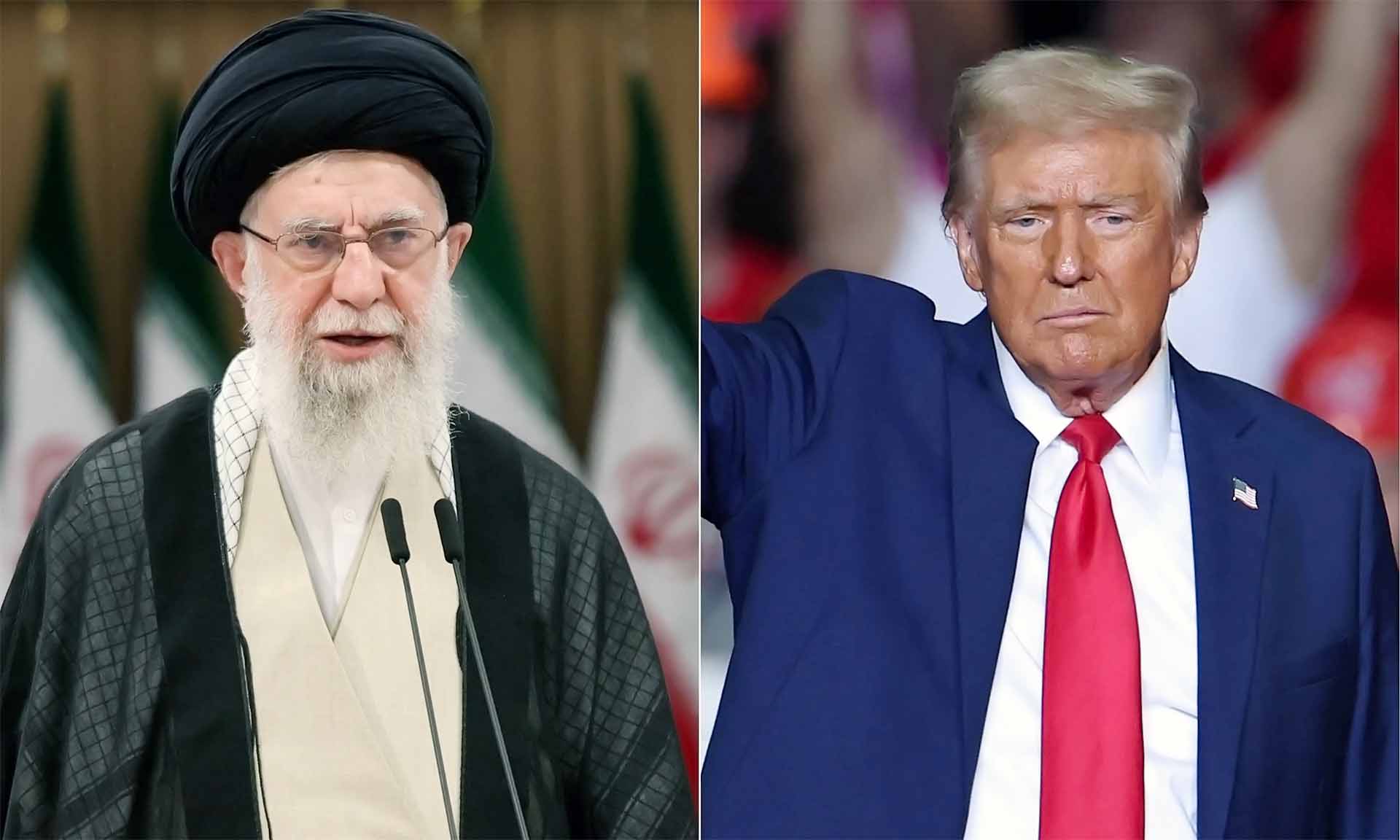
Iran has promised to respond strongly to any attacks after U.S. President Donald Trump threatened more military action if Tehran tries to rebuild its nuclear program or missile capabilities.
President Masoud Pezeshkian made this warning on X on Tuesday, one day after Trump met with Prime Minister Benjamin Netanyahu at his Florida estate. During this meeting, Trump strongly supported Israel’s position in the region.
The U.S. had not previously said it would target Iran’s missile capabilities, which is an important goal for Israel. Instead, the focus has been on Iran’s nuclear program. Iran insists that its nuclear activities are for peaceful purposes. U.S. intelligence and the U.N. nuclear watchdog have not found any evidence of nuclear weapons production before the attacks by the U.S. and Israel in June.
Iran has refused to negotiate about its missile program. These comments from both leaders raise concerns about a new conflict, just months after a 12-day war in June that killed over 1,100 Iranians and 28 Israelis.
Pezeshkian said that any aggression would lead to a “severe and regret-inducing” response from Iran. His statement came shortly after Trump told reporters at Mar-a-Lago that the U.S. could carry out another major attack on Iran.
“Now I hear that Iran is trying to build up again, and if they are, we’re going to have to knock them down,” Trump said while standing next to Netanyahu. “We’ll knock the hell out of them.”
Trump also stated that he would support immediate strikes on Iran’s nuclear program and missile facilities if Tehran continues developing long-range weapons.
Iran is Rebuilding Its Ballistic Missile Stockpile, Israeli Forces Say
Israeli officials are worried that Iran is rebuilding its stockpile of ballistic missiles after significant losses during the June conflict.
One Israeli official told Ynet that if the U.S. does not reach an agreement with Iran to stop its ballistic missile program, a confrontation with Tehran might be necessary.
Pezeshkian described the situation as a “full-scale war” involving the U.S., Israel, and Europe. He said this conflict is “more complicated and more difficult” than Iran’s war with Iraq in the 1980s, which killed over one million people.
In June, Israel carried out nearly 360 strikes across 27 Iranian provinces in 12 days, according to the conflict monitoring group ACLED. The attacks focused on military bases, nuclear plants, and government buildings. They destroyed many Iranian missiles and killed several important military leaders and scientists.
In response, Iran fired over 500 missiles at Israel, with some landing in towns. While Trump claimed that the strikes “completely obliterated” Iran’s nuclear capabilities, experts disagreed, saying Iran may still have hidden stockpiles of enriched uranium and could restart production within months.
Despite the damage, Iranian officials say they are now better prepared. Pezeshkian recently stated that Iran’s military forces are “stronger in terms of equipment and manpower” than they were before the ceasefire.
The war did not lead to the internal unrest that Netanyahu expected. There were no significant protests, and daily life in Tehran continued normally despite the attacks.
Leave a Reply