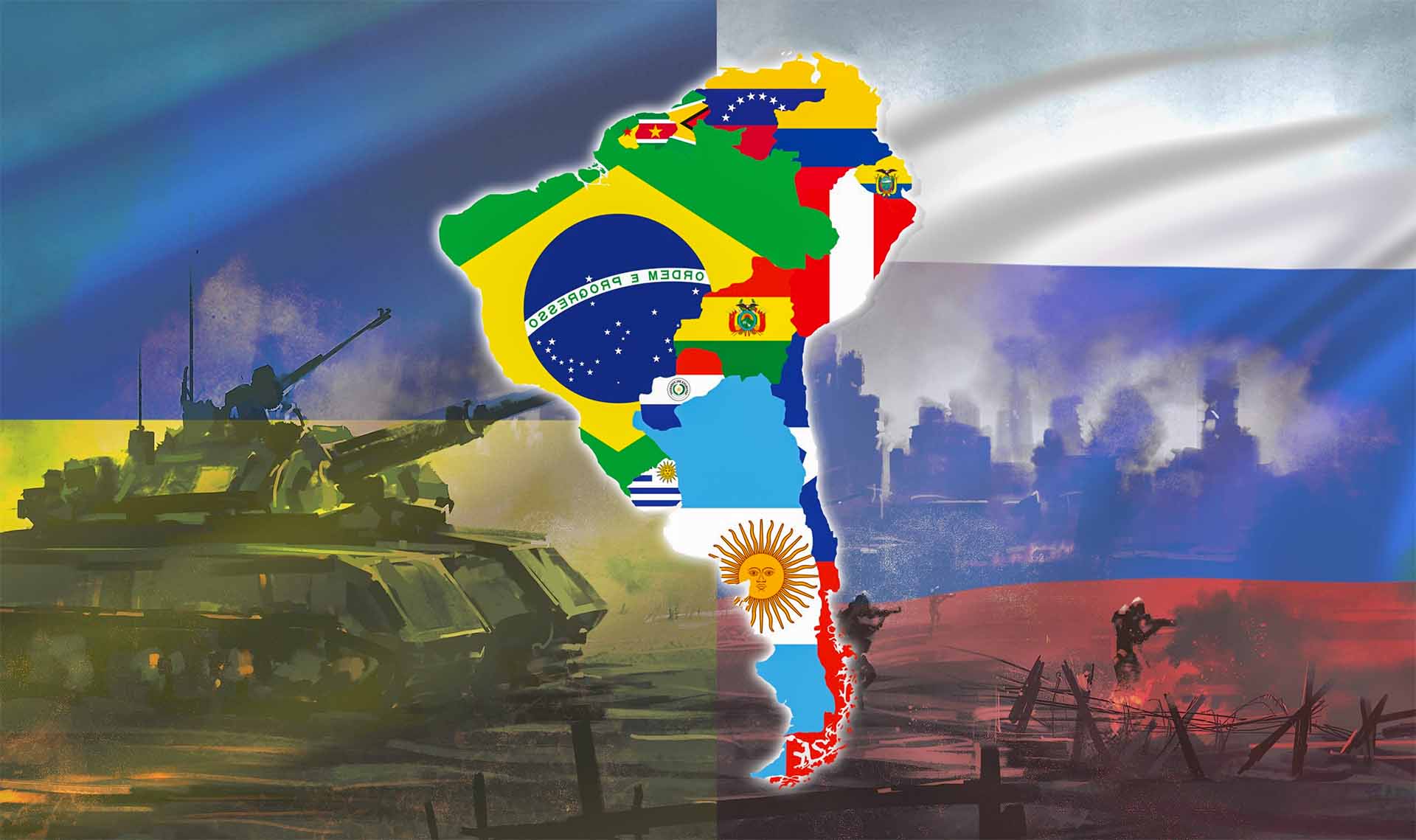
President Donald Trump’s growing threats to Venezuela may seem random, but they are part of larger global conflicts. This situation is not just a regional issue; it has broader implications.
Venezuela is becoming a bargaining chip in the struggle between major world powers, similar to Ukraine.
In his history of World War II, Antony Beevor shows how different conflicts around the globe, like the Nanjing massacre in China, Mussolini’s invasion of Abyssinia, and the Spanish Civil War, contributed to the start of the war.
This does not mean we are heading toward a third world war, but the risk is always present. As long as Trump and Russian President Vladimir Putin focus more on making deals than on fighting, it is more likely that they will reach an agreement than that a global war will occur.
Venezuela may not be a superpower, but it is important globally. It has the largest proven oil reserves in the world and is a political ally of China, Iran, and Russia, all countries that the US sees as rivals. Among these, Russia has the most complicated relationship with Venezuela. The US’s actions carry risks for Russia, but there may also be benefits.
A significant factor in this situation is the surprising improvement in US-Russia relations during Trump’s second term.
The War is Ending on His Terms
Since Vladimir Putin became president in 2000, the Kremlin has seen the United States as an unreliable partner and later as an enemy, believing the US aims to divide and control countries in the former Soviet Union.
Things changed when Donald Trump returned to the White House in early 2025. The US largely stopped its financial aid to Ukraine and took a neutral stance, although it still provides important intelligence to the Ukrainian military. In its latest National Security Strategy, the US even removed Russia from the list of “direct threats.”
As peace talks regarding Ukraine, started by Trump, slowly move forward, Putin may think that the war will end on terms favorable to him. Despite showing defiance, Ukrainian President Volodymyr Zelenskyy recently indicated he might agree to withdraw Ukrainian forces from northern Donbas, which is one of Russia’s main demands in the negotiations. This is just one of several concessions he has mentioned he might consider in 2025, while the Kremlin stays firm in its position.
At the same time, European Union countries have struggled to agree on a reparations loan that could provide steady funding for Ukraine in the future. A last-minute, cheaper alternative was suggested, but this situation shows the limits of Europe’s support for Ukraine.
Given these factors, it is not a good time for the Kremlin to risk its complicated but generally beneficial relationship with Trump’s administration over an issue as unrelated to Russia’s main interests as Venezuela.
Russia may make the expected public statements. Vassily Nebenzia, Russia’s envoy to the United Nations, accused the US of “aggressive neocolonialism” by pressuring Venezuela. He claimed the US is “cynically imposing its order” to maintain global control and exploit other countries’ resources without consequences.
This refers to the US’s demands for Venezuela to allow American oil companies back in, which used to control much of the country’s oil industry before it was gradually nationalized in the 1970s.
Military Attack on Venezuela Potentially Exceeds the Losses
The potential fall of Nicolas Maduro’s government is unlikely to be a disaster for Russia. Russia has shown it can adapt to new governments that replace its traditional allies in countries affected by U.S. regime change, as seen in Iraq and Syria.
There are also political calculations to consider. A U.S. military attack on Venezuela might have more benefits than drawbacks for Russia. Such an attack would put Russia and the U.S. on equal moral ground regarding the war in Ukraine. If the U.S. can use military force in what it calls “its backyard,” why can’t Russia do the same within its own sphere? U.S. actions in Venezuela could justify Russian actions in Ukraine for many, especially in the Global South. This would further divide the U.S. from Europe and increase polarization within the U.S. itself.
If the Trump administration also pursues its goal of occupying Greenland along with actions in Venezuela, the situation could become even better for Russia. This could create opportunities for better relations with the EU part of Europe, which is currently Russia’s main global rival.
Overall, Russians see themselves as defenders of the old order. They believe the U.S.-led West is trying to change the established post-World War II order, and they view the war in Ukraine as a way to push back against these changes.
Leave a Reply