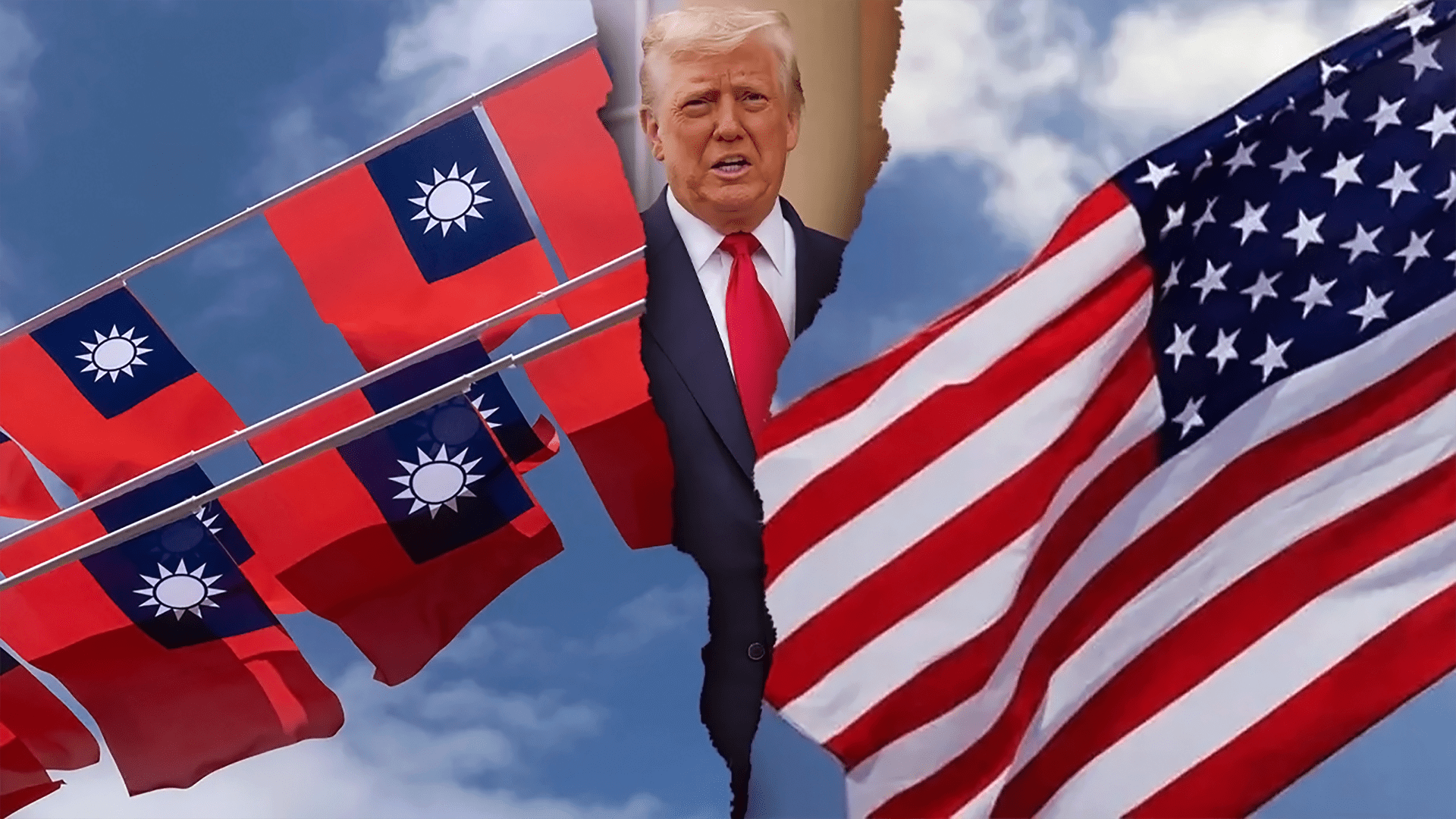
The Trump administration announced on Wednesday an $11.1 billion arms sale to Taiwan, marking the largest U.S. weapons package ever offered to the island amid increasing military pressure from China.
This arms sale is the second one during President Donald Trump’s current administration and comes as Beijing intensifies its military and diplomatic pressure against Taiwan, which rejects Beijing’s claims of sovereignty.
The proposed arms sales include eight items, such as HIMARS rocket systems, howitzers, Javelin anti-tank missiles, Altius loitering munition drones, and parts for additional equipment, according to a statement from Taiwan’s defense ministry.
“The United States continues to assist Taiwan in maintaining sufficient self-defense capabilities, rapidly building strong deterrent power, and leveraging asymmetric warfare advantages, all of which are fundamental to maintaining regional peace and stability,” the ministry added.
The package must be approved by the U.S. Congress, where Taiwan enjoys widespread bipartisan support.
The Pentagon announced that the recent arms deal supports U.S. interests in national security, economy, and safety. The sales will help Taiwan modernize its armed forces and keep a strong defense.
Encouraged by the United States, Taiwan has been working to transform its armed forces to engage in “asymmetric warfare,” utilizing mobile, smaller, and often less expensive weapons that still deliver effective strikes, such as drones.
“Our country will continue to promote defense reforms, strengthen whole-of-society defense resilience, demonstrate our determination to defend ourselves, and safeguard peace through strength,” stated Karen Kuo, spokesperson for Taiwan’s presidential office, while expressing gratitude to the U.S. for the arms sales.
$40 Billion 2026 Supplementary Defense
Last month, Taiwan’s President Lai Ching-te announced a $40 billion defense budget for 2026 to 2033. He emphasized that there can be no compromise on national security.
China’s foreign ministry reacted strongly, as it does with all U.S. arms sales to Taiwan. They said these deals endanger peace and stability in the Taiwan Strait and demanded that the U.S. stop these transactions. Guo Jiakun, a spokesperson for the ministry, warned that by supporting Taiwan’s independence with weapons, the U.S. would create problems for itself and that using Taiwan to limit China’s power will ultimately fail.
Rupert Hammond-Chambers, president of the U.S.-Taiwan Business Council, stated that weapons like the HIMARS, which have been used by Ukraine against Russia, could help defend against a Chinese invasion. He added that this new package of U.S. security assistance for Taiwan is a response to China’s threats and reflects a call from Mr. Trump for allies to take more responsibility for their own defense.
Foreign Minister’s US Visit
Taiwan’s Foreign Minister, Lin Chia-lung, traveled to the Washington area last week to meet with U.S. officials. This trip was not announced in advance, according to two sources who spoke to Reuters but wished to remain anonymous.
It is unclear what was discussed in these meetings, and Taiwan’s foreign ministry has chosen not to comment.
The U.S. has formal diplomatic ties with China but maintains unofficial relations with Taiwan and is its main supplier of arms. U.S. law requires that Taiwan be provided with the means to defend itself, which creates tension with China.
U.S. President Trump’s focus on deal-making and his planned meeting with Chinese President Xi Jinping next year have raised concerns about potential weakening of U.S. support for Taiwan. However, U.S. officials told Reuters at the beginning of Trump’s second term that they planned to increase weapons sales to Taiwan beyond the levels of his first term. This is part of an effort to deter China.
The Trump administration’s national security strategy, released earlier this month, stated that the U.S. aims to prevent conflict over Taiwan by keeping military strength in the region. This statement was positively received in Taipei.
The strategy also noted Taiwan’s importance due to its location, which separates Northeast and Southeast Asia. China considers Taiwan to be part of its territory, a claim that Taiwan rejects.
Leave a Reply